Lake of Stars
"Lake Malawi is not merely a body of water, it is a gateway to another world. A world where time slows down and worries melt away…."
Anon
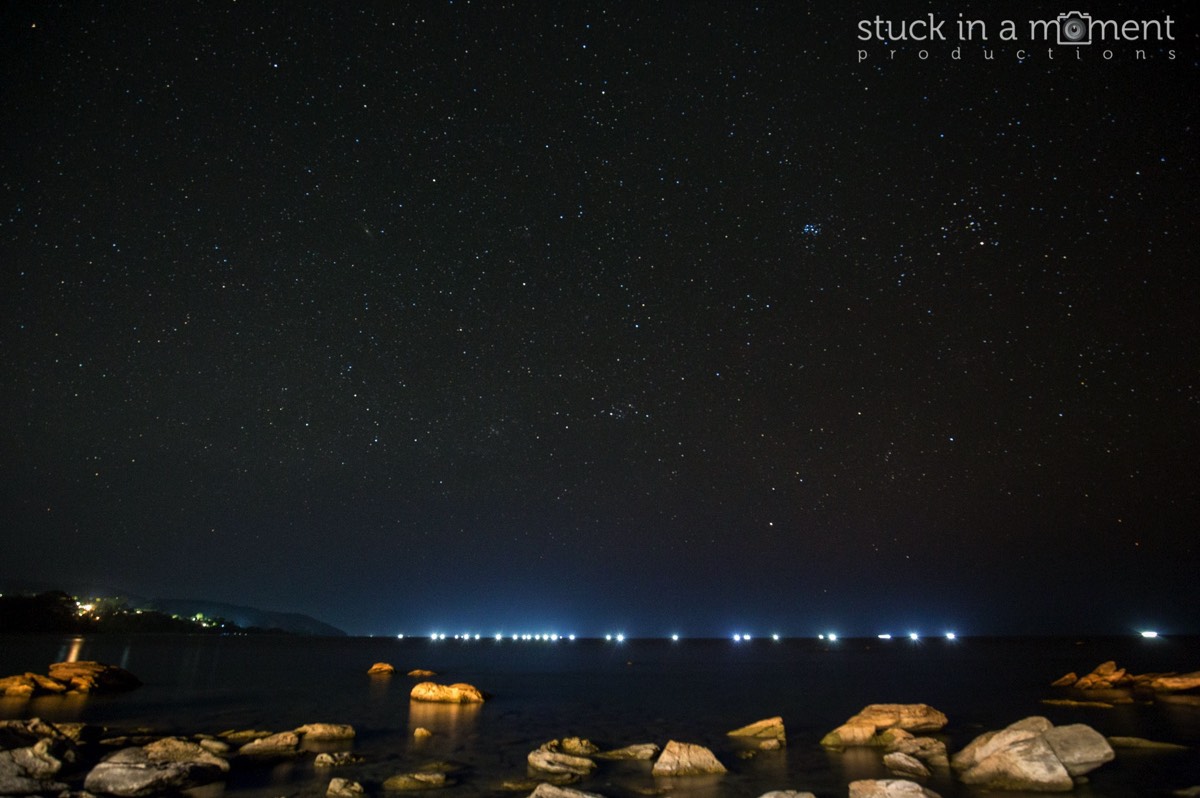
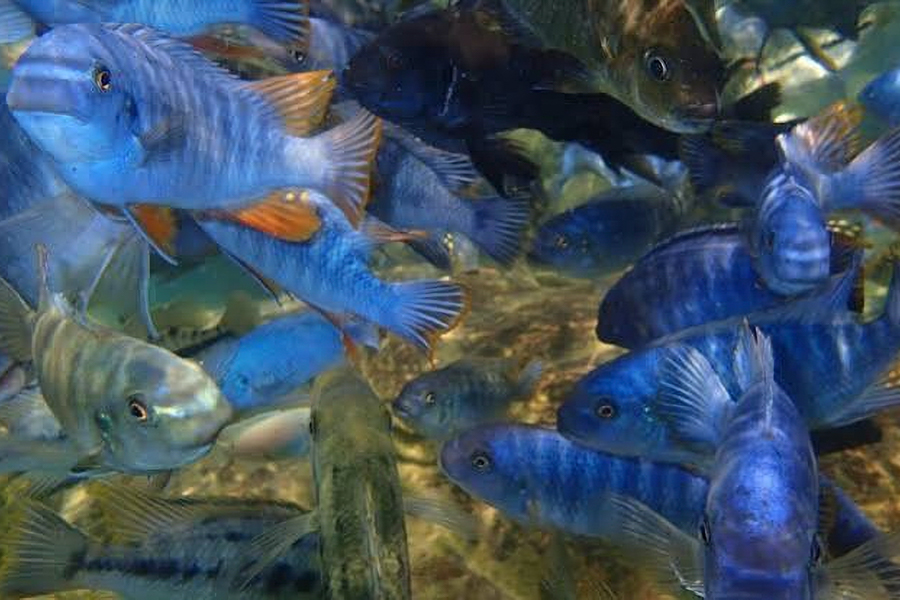
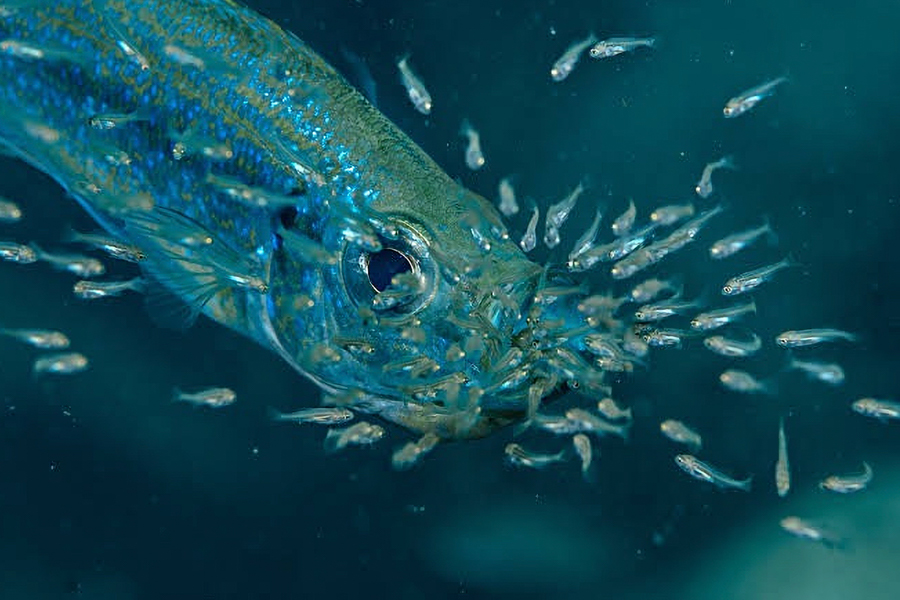
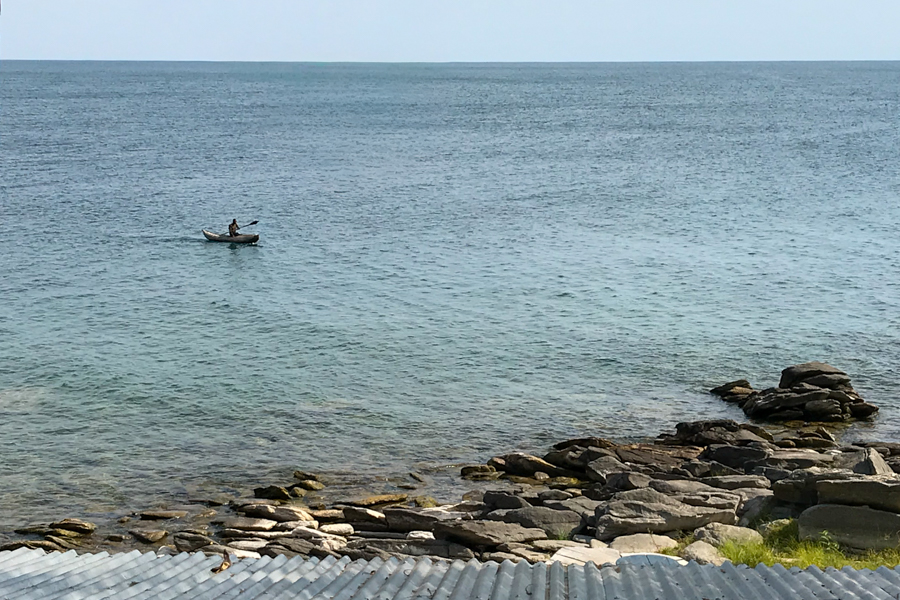
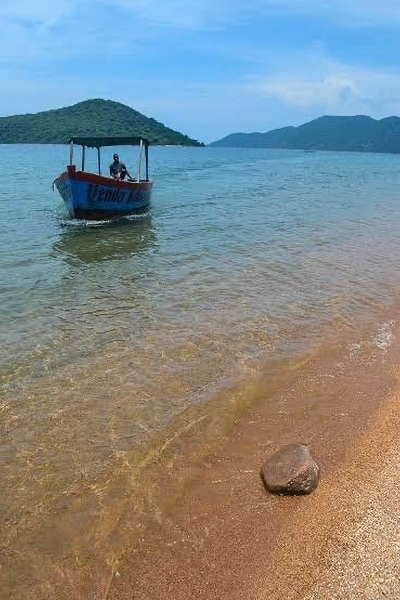
Lake Malawi is also known as the Lake of Stars, a term coined by David Livingstone, inspired by the lake at night lit by the lanterns of hundreds of fishing boats. It is known for its crystal clear waters and unparalleled biodiversity. Home to the African cichlids, a unique group of freshwater fish with the fastest evolutionary development known.
Nkhata Bay
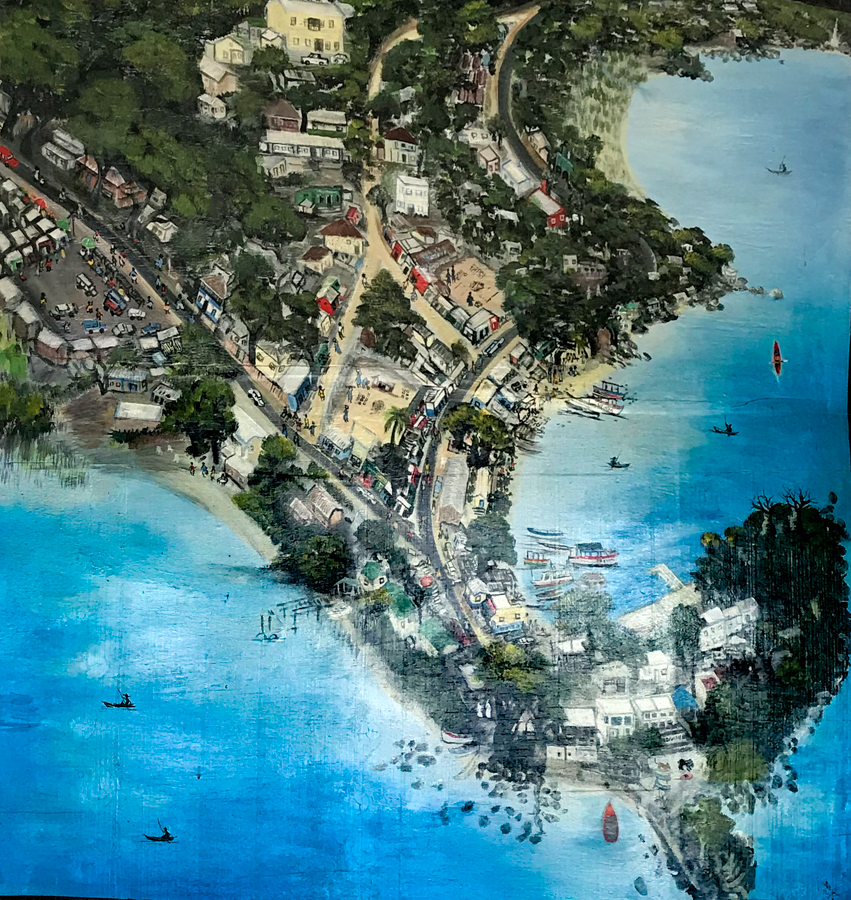
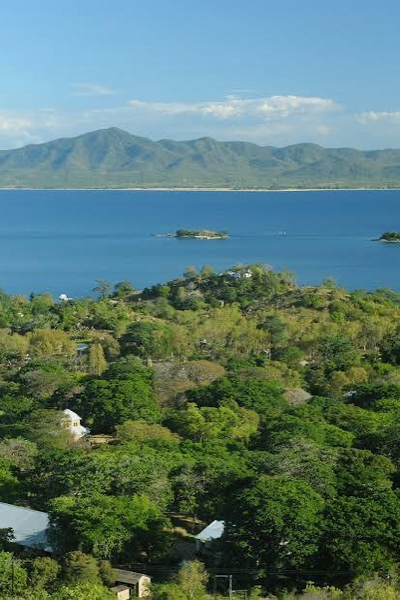
Nkhata Bay is a small port town on the Western side of Lake Malawi about half way down the lake. It is on the route of the main ferry between Monkey Bay in the south and Chilumba in the north. Its main industry is fish together with some agriculture and tourism. It has a long history in tourism as part of the Backpackers Route but this was hit by the isolation of Zimbabwe which led to the backpackers rerouting through Mozambique and Zambia. Despite this it still has a very hippy, backpacker vibe with numerous small hostels and eco lodges for accommodation, and a very laid back atmosphere.
We were attracted there by the fact it has a dive concern called Aqua Africa and we were keen to get underwater.
Butterfly Space
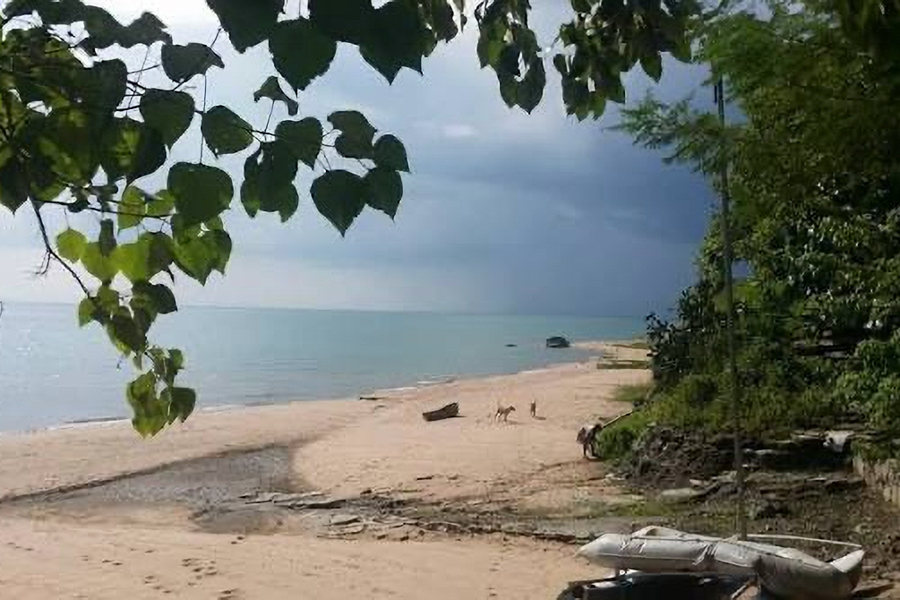
Arriving in Nkhata we were faced with the need for accommodation. Because infrastructure was developed for backpackers, and because the shore of the lake is steep and rocky, the majority of the camping is set up for small ground tents and not for rooftop vehicular access. We cruised around town looking for a likely spot but nothing would take our cruisers. Eventually we decided we would need to stay in a hostel. Butterfly Space on the southern end of town overlooks a beautiful bay and was advertising an all night party. Lisa needed no encouragement and we booked into 2 small cabins.
I won't lie, the place is in need of some serious maintenance, Our room had no running water, no electricity and plug sockets infested with ants. Whenever I grasped a handle or door jamb it came away in my hands, but it was full of young people and they had a bar and restaurant overlooking the lake, and a smattering of hammocks across the hillside. They run a variety of well intentioned volunteer programs which ensures they have a steady stream of young, and naive, guests.
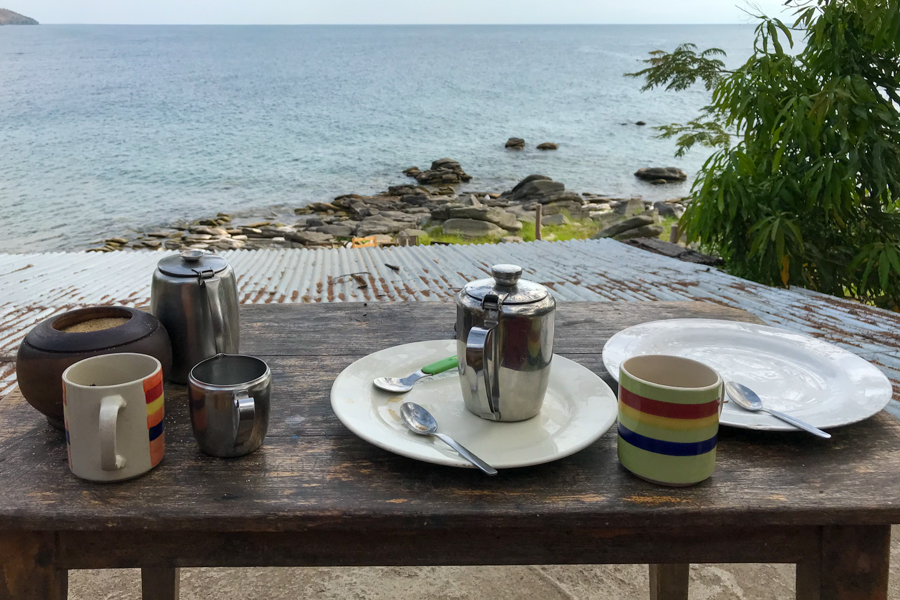
We were exhausted and after a drink at the bar we left Lisa to mix and mingle. I thought we had been let off lightly at first but at 9.00 the DJ ramped up the music so it shook the little houses and the jollity went on until 4,00 am.
We woke up to our next door neighbour vomiting into a bucket. What parents do for their children! At least the breakfast space was quiet.
With some trepidation we went to wake Lisa but found her full of beans having retired at 2.00am. No apparent after effects. At least nothing a plate of bacon and eggs could not fix.
We went to reclaim the cars and find the dive school. The car guard tried hard to sell us Malawi Gold. The best hashish in the area. Dudley was wearing tie die again!
Aqua Africa
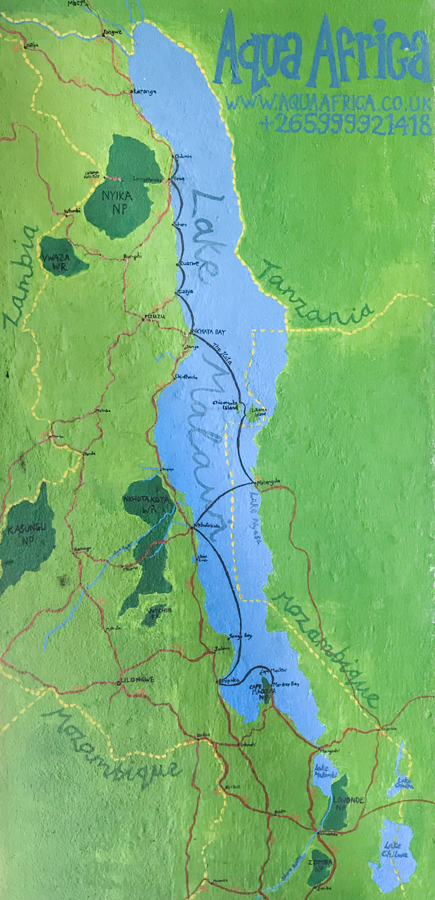

Diving in Lake Malawi occurs mostly in the south at Cape MacClear but there is a well equipped dive school, run by a British girl and her son, called Aqua Africa, overlooking the bay in Nkhata and advertised as the cheapest diving in Africa.
I would have to demur at this, but it was friendly and they were willing and ready to help us.
We booked a package, a day and a night dive for $100 each, for the following day

Next day we returned to the school and were equipped with shortie wet suits and gear and went down to the boat launch. A very short boat ride took us to an area just off Butterfly Space and we dived in. The water was a little milky.
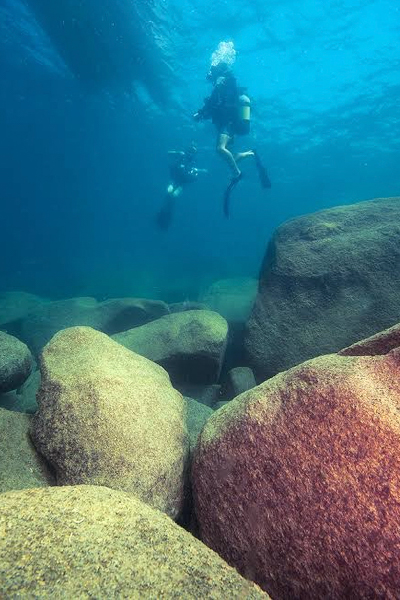
The bottom is strewn with granite rocks, caves and gullies. Rather a stark canvas. We could chase and follow the cichlids to our hearts content and watch their amazing behaviours, habits and foibles. Mouth brooders and builders of geometric nests in the sand. They are quick though. I think they know they need to move to stay out of trouble. A few catfish, an eel or 2 and an amazing blue swimmer crab competed the cast.
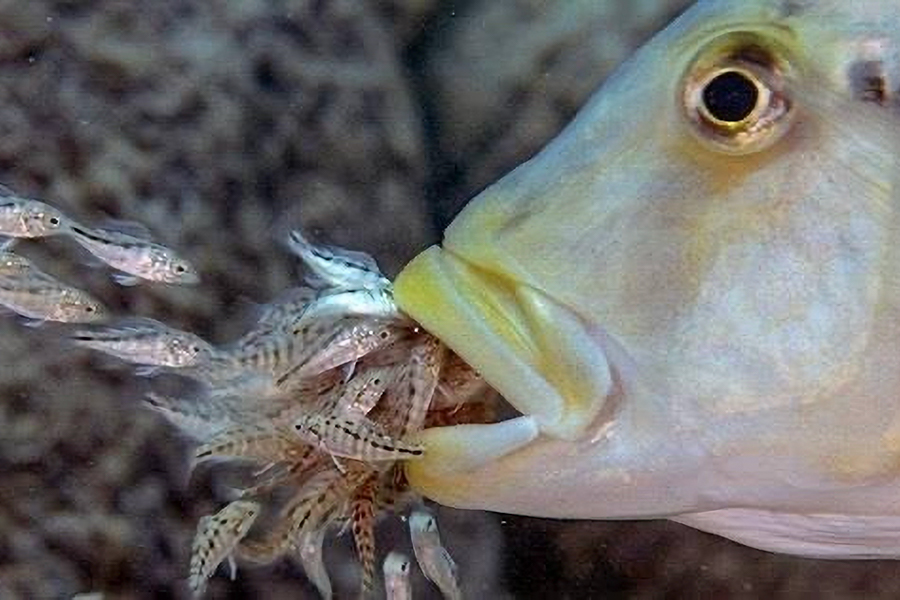
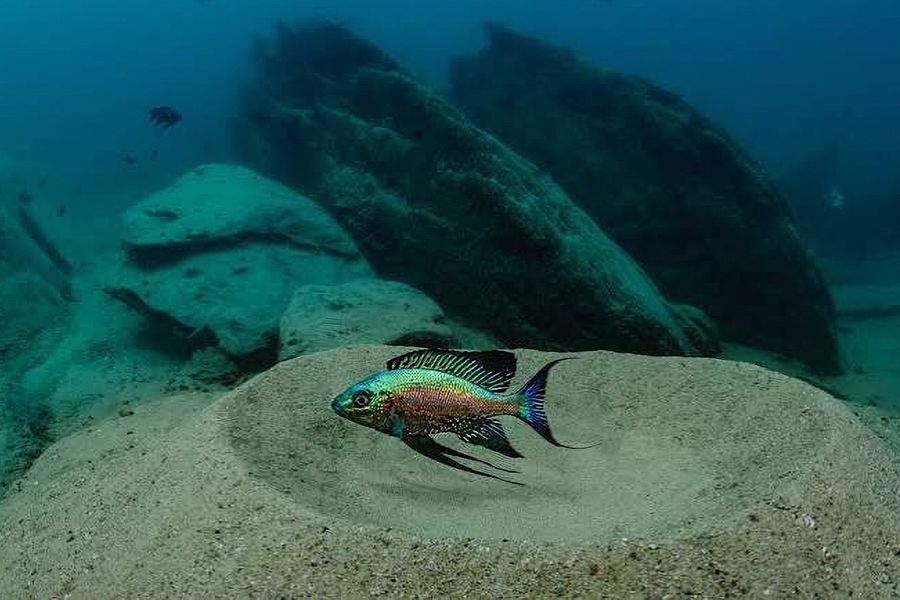
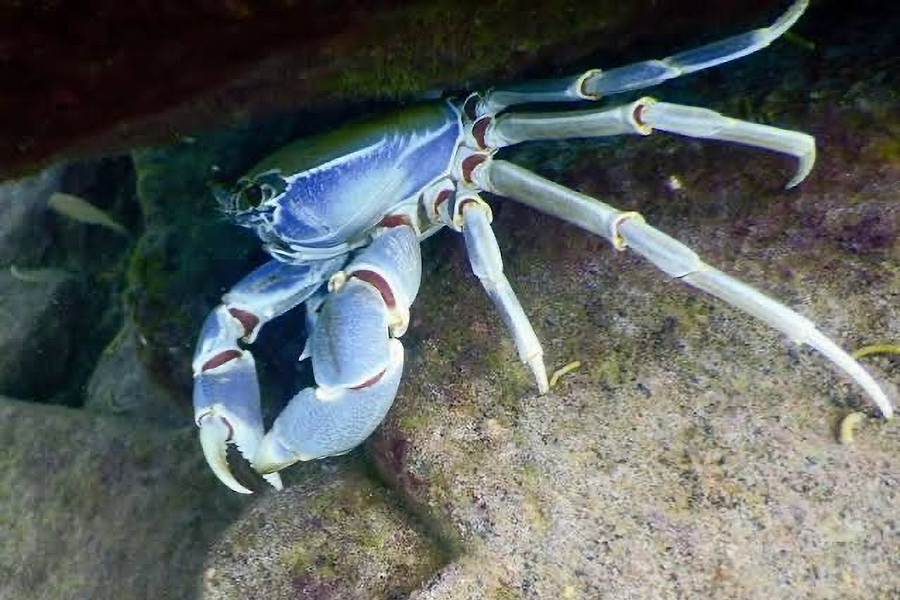
As dusk fell we returned to the boat for our night dive. The boat travelled an even shorter distance before we slipped into the water. We were armed with bright torches. The cichlids were slow and drowsy but we were here to see the eponymously named dolphin fish.
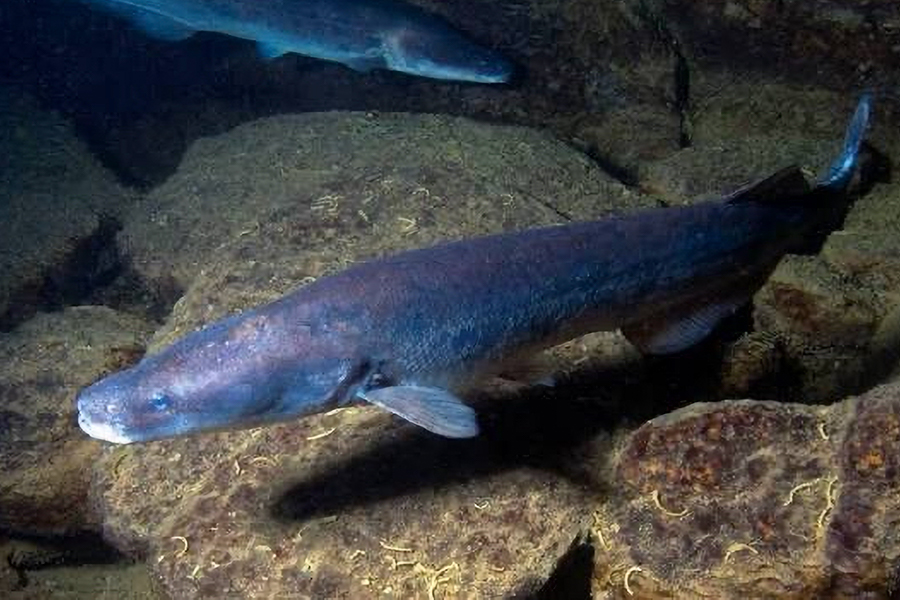
It did not take them long to make an appearance. They are long grey fish a bit like eels, and they swim in shoals. They hunt the sleepy cichlids like an exterminator squad and they used our lights to hunt by, often brushing your legs or body as they came past. A bit creepy. A wider variety of catfish also appeared, they have 7 species of catfish in the lake. It grew cold quickly when the sun down and we finished up after 50 minutes back at the boat with hot towels.
I am not sure I would dive there aggressively day after day, well not without my camera and a better understanding of cichlid diversity and behaviour, but it was easy diving, very enjoyable and well worthwhile. The bonus is it did not matter how much noise Butterfly Space made that night, we all slept like the dead! You have to love Nitrogen.
Ferries and Fish
It may be called a lake but Lake Malawi is the size of a small sea and can experience vicious weather and storms.
The dive school looked out over the bay and while whiling away our time between dives we watched the ferries as they came around the corner. They then pulled into shore below the dive school and loaded on a whole lot more passengers.
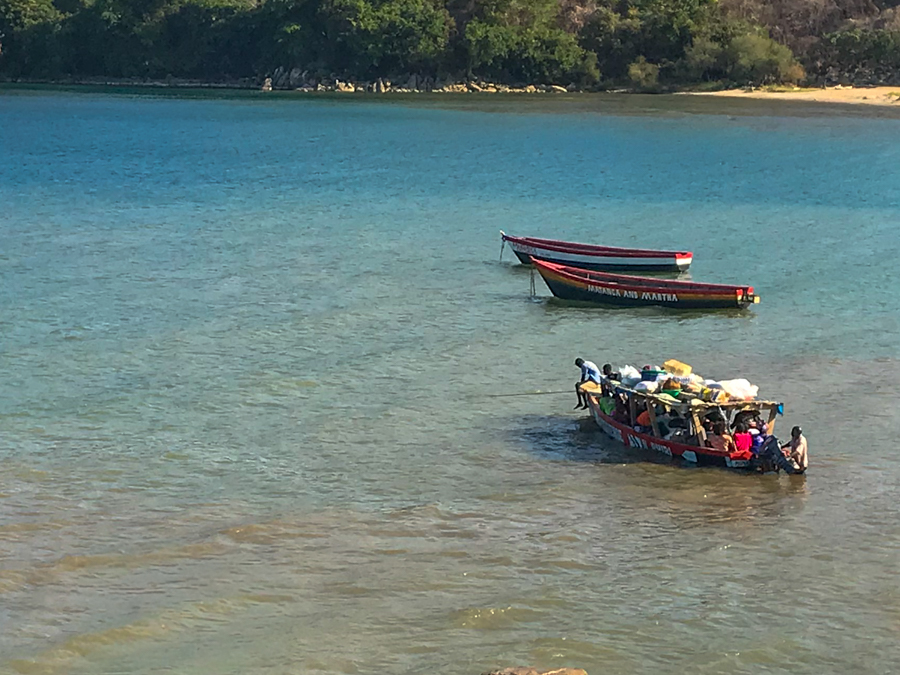
They told us this was to get around the port tax, but it also meant that the boats were ridiculously overloaded. The passengers waded out to the boat with suitcases on their heads. Malawi ferries have a reputation for running into trouble when the wind blows. We had just been given a birds eye view of why. I don't think they are in the greatest repair at the best of times but with 200% passenger load plus cargo they are pretty scary. It does not help that most Malawis don't swim. A recent boat had reportedly been forced to jettison valuable cargo when caught in a storm, including the passengers suitcases. We met 2 groups of travellers who had been on the boat and it sounded like survival was pretty touch and go. Do you throw the tourist or the beer overboard first?
The crazy part is after the boat finally made it to shore and disgorged the traumatised passengers, the locals had no choice but to sleep on the beach and get back on the same boat next day to continue the journey. The people we met bought another ticket for the MV Ilala, the biggest and most famous ferry, next day, but when taken to the boat by a tender they found the first 2 decks were full of Usipa fish which they had to crawl over on their bellies to get onboard, and the first class cabins had cockroaches. New boat, different challenges! It puts our transport problems into perspective!
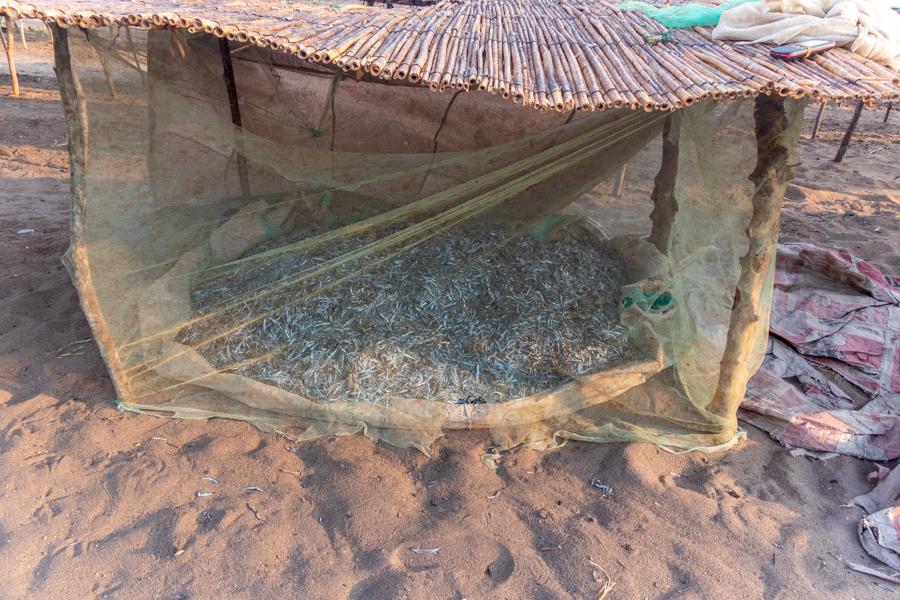
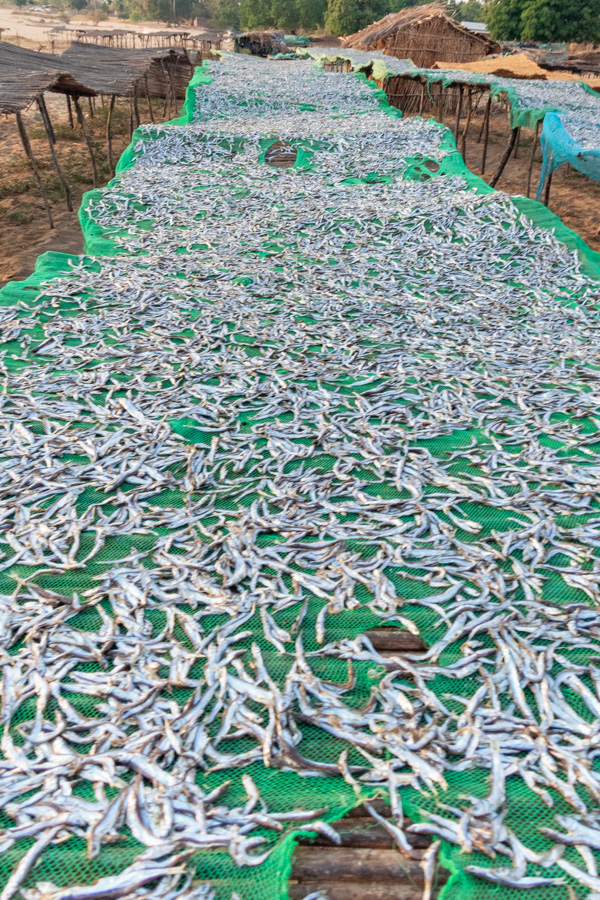
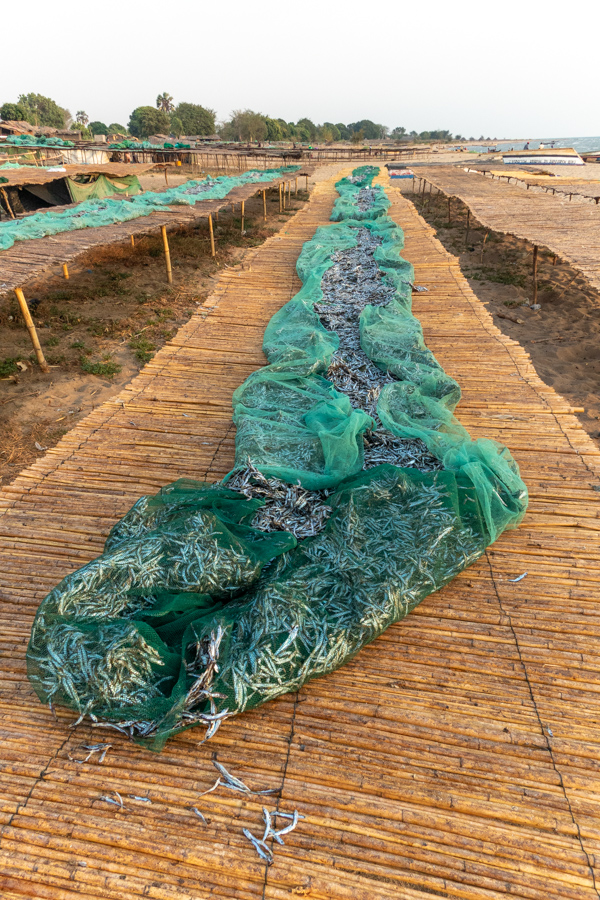
Drying the Usipa fish on drying tables on the beach before bagging them for market.
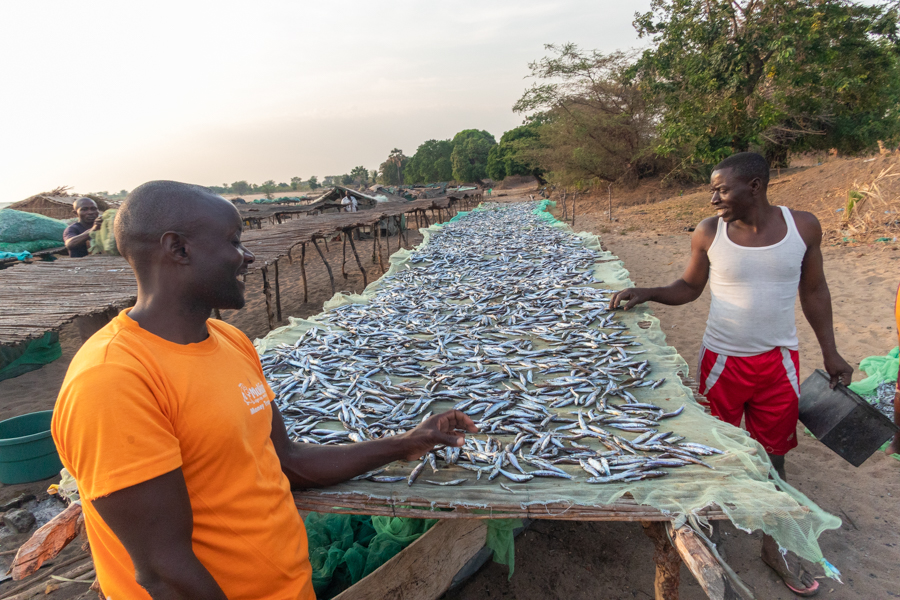
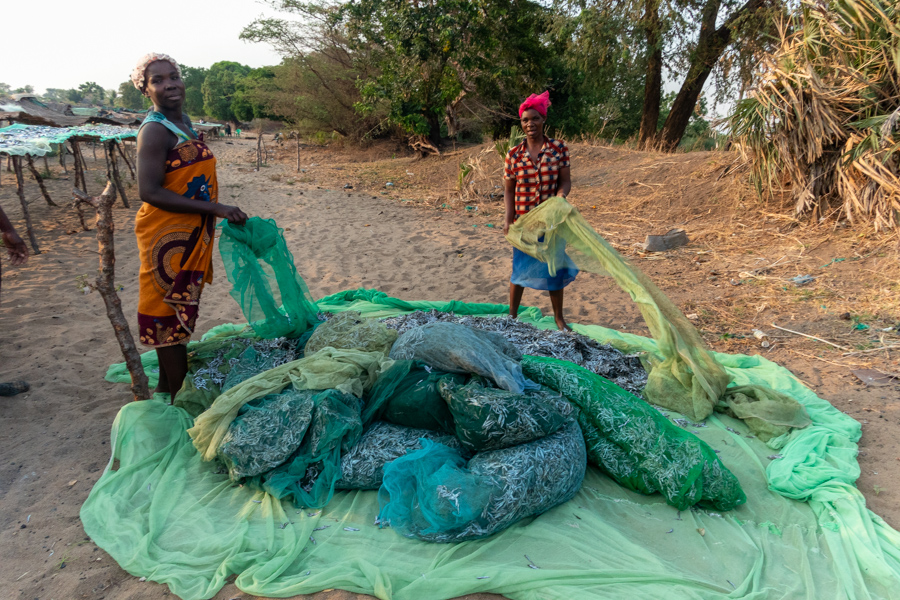
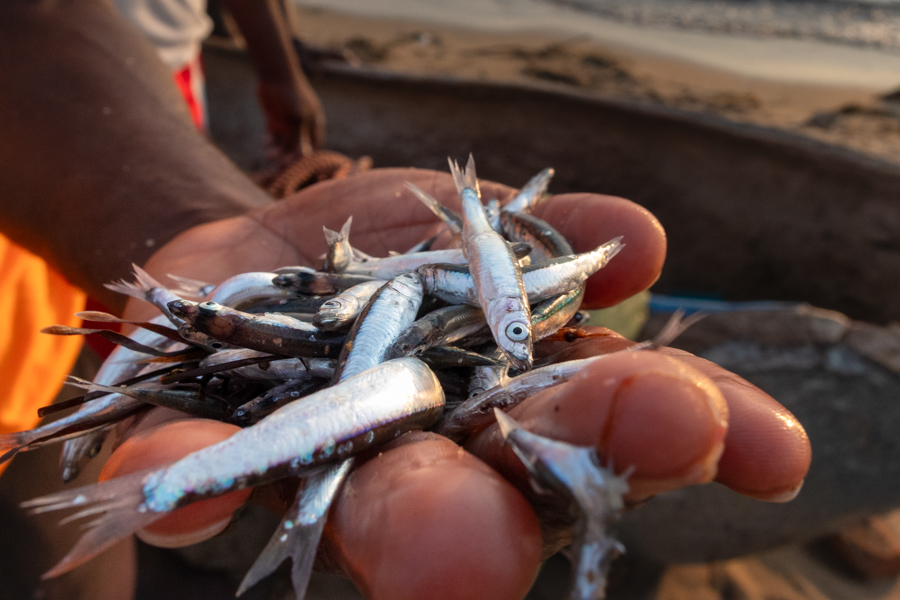
Despite this insight, Lake Malawi remains the life blood of the country, a pillar of the economy and a vital part of their food security. Fishing is mainly a small scale artisanal industry but large scale operations, and fish farms are beginning to make an appearance.
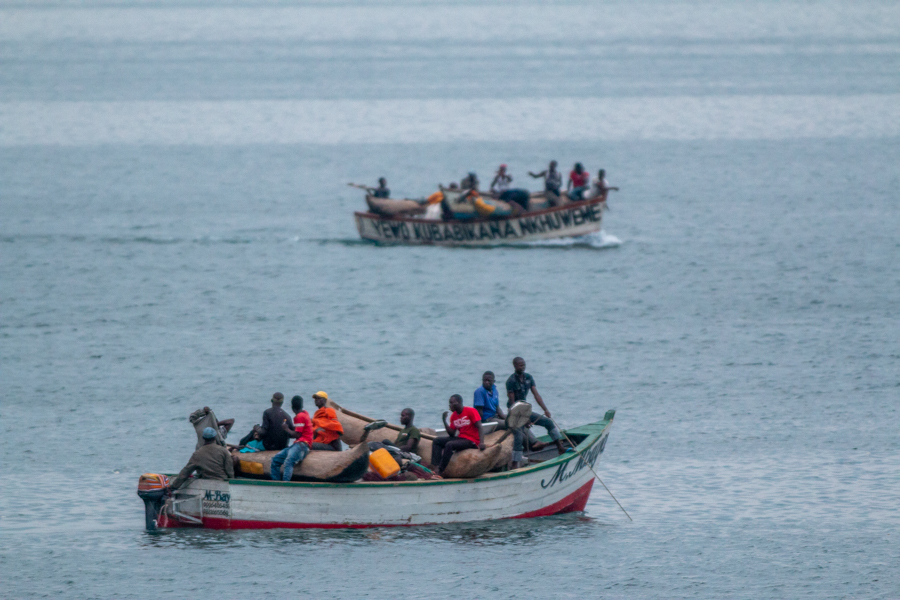
90% of the fish caught are dried or smoked. Most of the fish caught are a tiny silver fish called Usipa or Lake Malawi sardine, similar to the Tanzanian and Zambian Kapenta, caught with gill nets or trawling. 70% of the fishing boats are dug out canoes. Usually a fishing boat goes out with a small 15 HP outboard engine and a fleet of dugout canoes and a crew of 8-10 men. They have a battery to feed banks of LED lights which attract the fish. The men use the canoes to deploy the nets. If they are lucky they may fill half the boat with fish, worth about Kwa 500,000 or R8000.
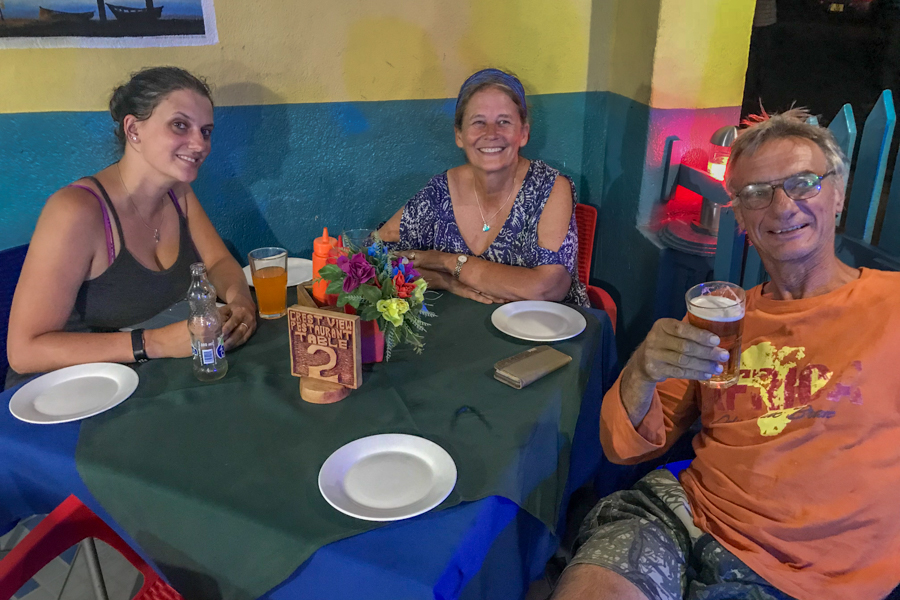
We finished our day of diving in town at a local fish restaurant. First we had to navigate through bags and bags of the small silver Usipa lining the quay.
They are dried on drying racks and then packaged for market. I have to say they are not to my taste but Dudley ate them in Zambia once and said they were very tasty. Fish biltong.
The food was fresh but no one fillets fish here and so our dinner of butter fish was served whole, staring at us from opaque eyes, and full of bones. Slightly hazardous.
Most of Butterflys guests pitched up for supper, young, white, barely dressed volunteers escorted by local boys, swaggering and posturing. Ah youth!
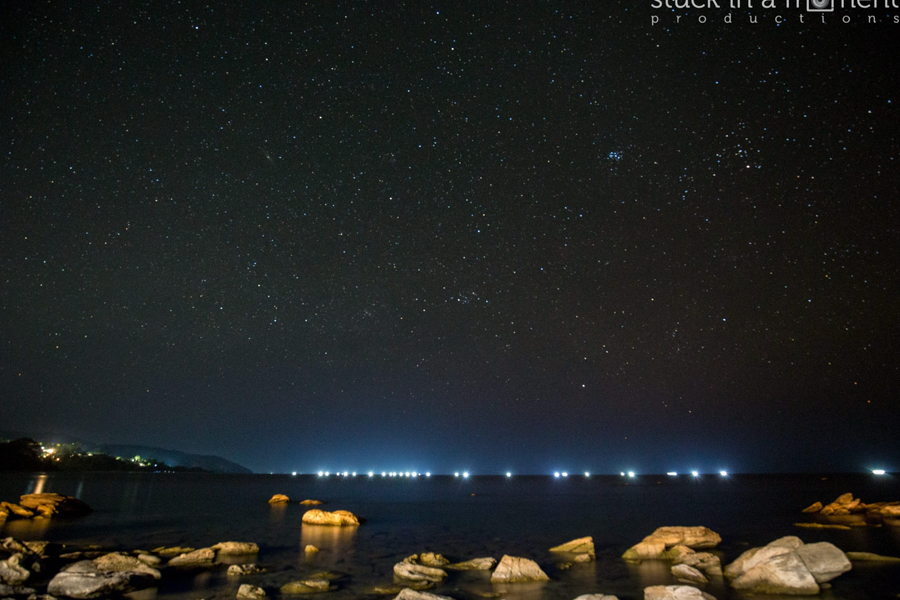
At night Livingstone's Lake of Stars is largely unchanged, still twinkling with the lanterns of hundreds of small fishing boats, guiding us back to our beds.