
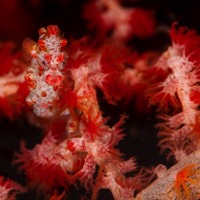
Kungkungan Bay
Kungkungan Bay Resort (KBR) is in the Lembeh Straits, Indonesia, and is ideal for year round diving. It remains one of our favourite dive spots of all time,and even after 2 trips and a solid 6 weeks of diving there, we still yearn to return.
The straits are protected by the mountains of Sulawezi to the west and Lembeh Island to the east. The dive sites vary from familiar coral reefs to long slopes of apparently barren volcanic black sand.
On closer inspection this black sand is the richest and most biodiverse environment of all. The dive resort has spectacularly trained local guides who search these habitats to coax great numbers of spectacular animals to show themselves. An ark of underwater critters to amaze and photograph.
The resort itself has excellent accommodation supported by friendly and ever helpful staff. Hot towels on the beach and hot chocolate on the boat. What more can you ask for? The cuisine is fresh, plentiful and delicious, incorporating some exotic delicacies. We were introduced to local Indonesian fruits, most notably the mangosteen, part lichee, part orange, which tastes like heaven and became a firm favourite. The sulphuric Durian less so.
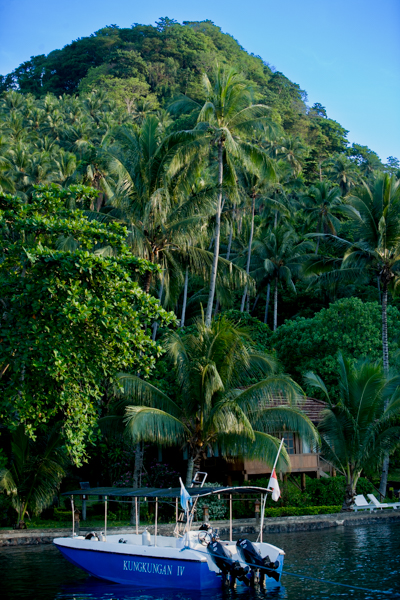
The resort nestles on the edge of the water. An octagonal building houses the bar and restaurant and an impressive library of books, many written by reknowned visitors to the resort, and based on their stay there. It is like checking a menu for your stay. There was always something to browse at each meal, and to plan the next dive from. Ideas from some of the best underwater photographers around and then enough models to try all the options, lighting, compositions and angles.
Accommodation is on little houses on stilts, barely meters from the water and the launch. Roll out of bed and into the dive boat in the morning and vice versa at night. There is impressive humidity and a lush tropical flora rising from the water.

The Lembeh Straights, Indonesia
Whether it's the nutrient rich waters or the absence of large corals, the Lembeh Straits has unique geographical features which ensure that it is recognised as having the worlds highest concentration of rare and unusual marine life. The variety and colour of the animals encountered truly takes your breath away.
The bottom consists of a coarse black volcanic sand scattered with pieces of wood, plastic, tyres, cans, glass bottles, plants, algae and weed. When you take your first dive in this flat calm water you wonder what all the fuss is about. It just looks flat, muddy and dirty and strewn with litter. Having come from the east coast of Africa, and the beautiful coral reefs, it is a sore disappointment. But as your eyes adjust and you probe the random rubbish you realise that it is home to a plethora of critters. Small in size but large in personality. This is the epicentre of macro muck diving.
Interestingly the locals also tell tales of whale shark, pilot whales and dolphin in the straits back in the day but apparently the Chinese came and put nets across both entrances to the straits for an 11 month period in 1996 and pretty much fished out all the large species.
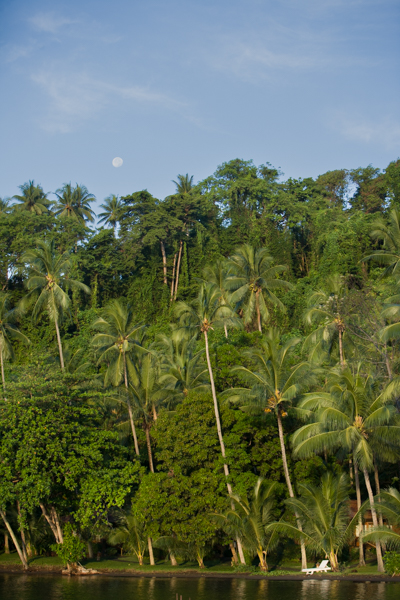
The palm fringed water front with a lonely sun lounger. We were too busy underwater to be bathing in the sun.

The dive boats are small flat bottom skiffs which take an average of 6-8 divers. The water in Lembeh is inevitably calm and still. No seasickness tablets required


Local fishing boats cruise past the restaurant deck.

Bitung harbour, just around the corner from the resort, and the source of much of the random rubbish on the sandy bottom.
Underwater delights
At first glance the life underwater appears to be in a state of perpetual motion. If you stop and look closely the elements resolve themselves into many stories and dramas, great and small, woven together as the animals feed, rest, hide, reproduce, stalk, and kill.
There are a myriad of hunters and prey with many strategies and defences, some more successful than others, including camouflage, chemicals, toxins, sharp spines. Many small animals hide amongst toxic tentacles or in crevices or mimic poisonous animals to avoid capture.
Some animals can change colour to better camouflage themselves against a changing background. The crinoid shrimp mimics perfectly the colours and texture of its host. This is mediated by hormone release from glands near the eyes.

We watched for 10 minutes as a small frog fish of 10 cms chased a flounder of 20 cms with the ambitious intent to eat it. Size was clearly not an issue. A Pandora's Box of animal behaviour and a cornucopia of underwater life.
A 40 cm plank of wood starts moving down the sand slope, you look under the wood to find a dorripid crab (Dorippe frascone), a light weight 3-4 cm crab, carrying the wood with its back legs, using it as camouflage. We found the same crab carrying a spiny sea urchin ( Astropyga radiata) for the same purpose.
The animals blend with amazing camouflage. A guide can point to an animal and unless it moves you can still miss it. The animals appear and disappear into the sand often squeezing into ridiculously small holes, which enhances the mystical quality of the dive experience as they disappear beneath the coarse volcanic sand as if by magic.
Good job the guides are world class spotters and rarely miss a thing!


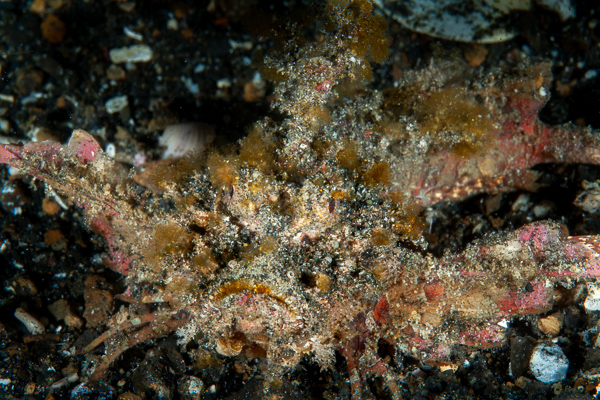

Hiding in plain sight.
Many of the fish are bottom dwellers (benthic ). They hunt by ambushing their prey and so they are well camouflaged and slow moving, waiting patiently for their opportunity. When the opportunity presents itself however, they strike with lightening speed, often faster than the eye can follow or the camera shutter capture. The prey is generally swallowed whole.
Some scorpion fish can bury themselves and, as they have a significant sting, a wary hand or knee settling on the sand can receive a nasty, and painful surprise. Buoyancy control is a must.
Other fish blend with their environment using camouflage as a protection, such as this peacock flounder. The coloured markings break up the outline and, when covered volcanic sand, these fish are impossible to see.

So with that in mind, let me give you a tour of some of the more colourful, unusual and wacky inhabitants…………