Where the Sky Touches the Sea.

"Live in the sunshine, swim the sea, drink the wild air."
Ralph Waldo Emerson
Our next destination was Namibe and the coast. We were looking forward to seeing the Angolan version of the skeleton coast, walking the beaches and (maybe) swimming in the sea, temperature permitting.



Serra da Leba
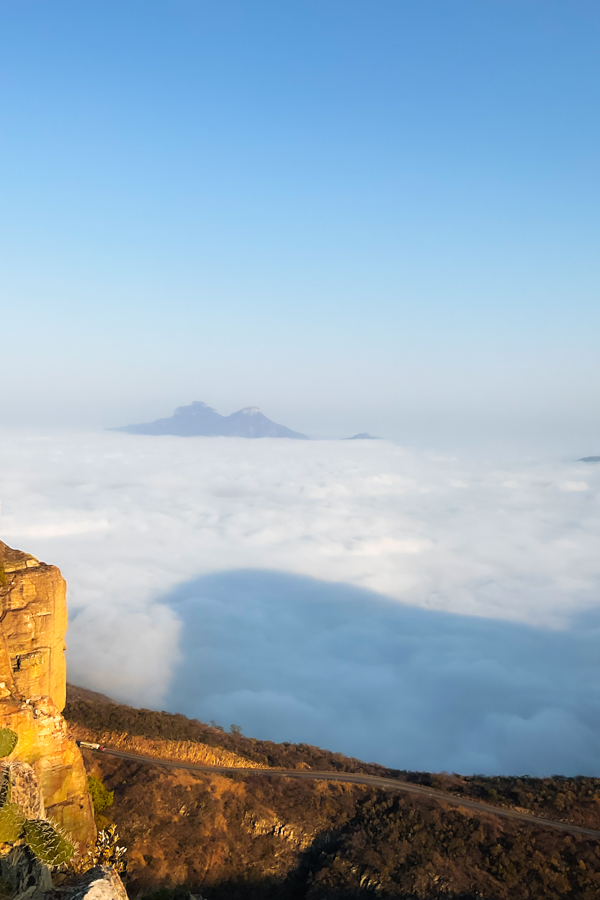
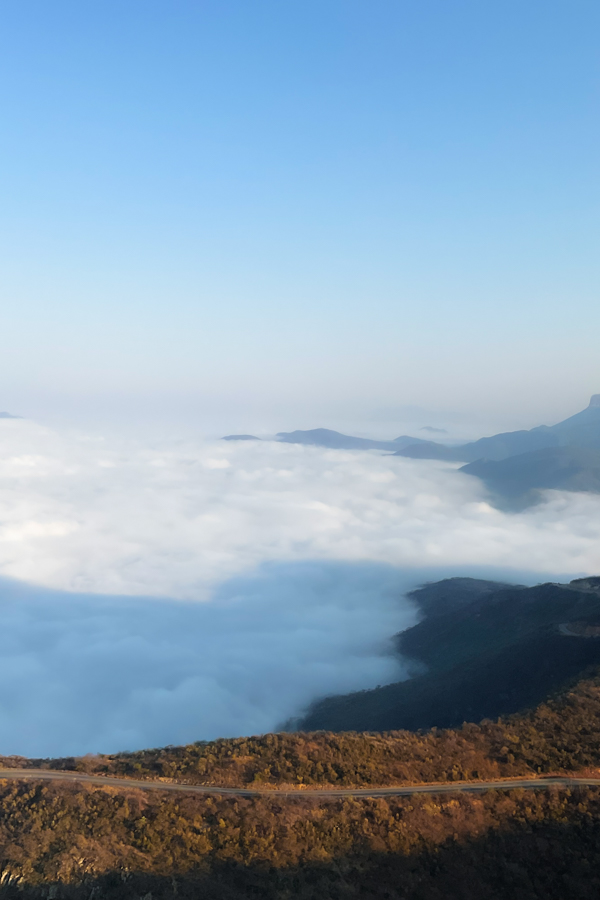


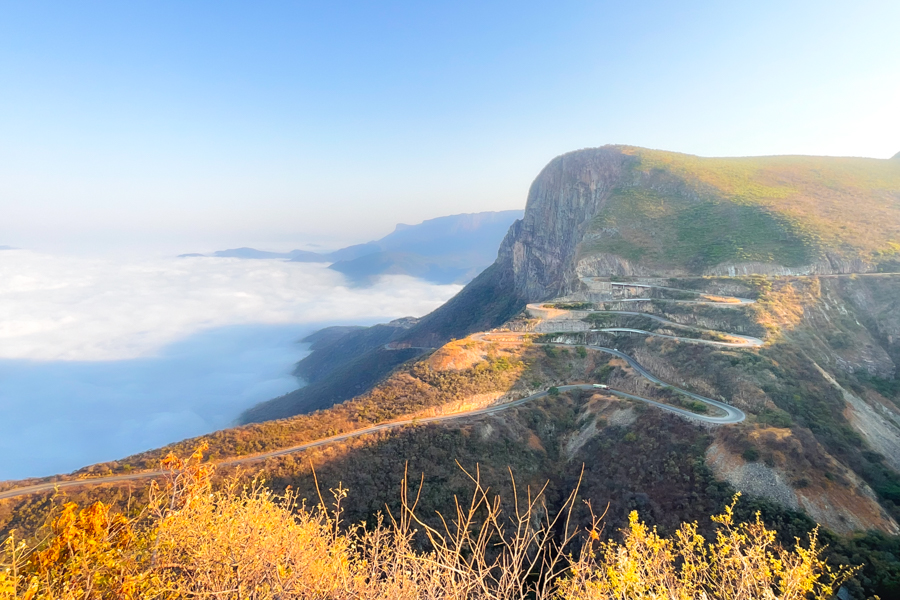
The view over the pass in the early morning light was very different and even more beautiful, low clouds hovered over the valley adding an air of mystery. We locked and loaded for the descent.
I won’t lie, it was a bit of an anticlimax, at least as far as the adrenaline was concerned.
The road is in good shape and we motored slow and easy in low gear without any hiccoughs. There was relatively little traffic at this time of the day. We descended closer and closer to the cloud line until we were enveloped in the mist and below the cloud it was a grey morning.
There was a definite sense of climate transition.


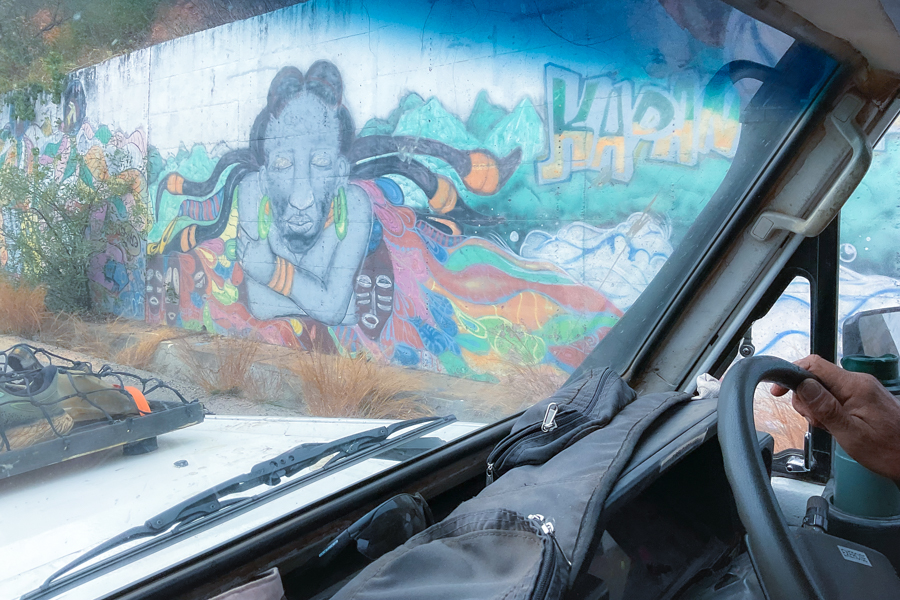
The graffiti on the pass was colourful.
Namibe

Small village at the bottom of the pass.
From the bottom of the pass we wound through some villages selling wooden bowls and carvings and veggies by the road. There were more people, rather more ragged than on the escarpment.
There was also more rubbish on the roadside.
The road to Namibe settled into a flat rather arid plain. More and more sand and stone, much of it stained black with mineral sediment.
A few oases were scattered around with agriculture. There were clear similarities to the coastal plains of Northern Namibia and Damaraland.
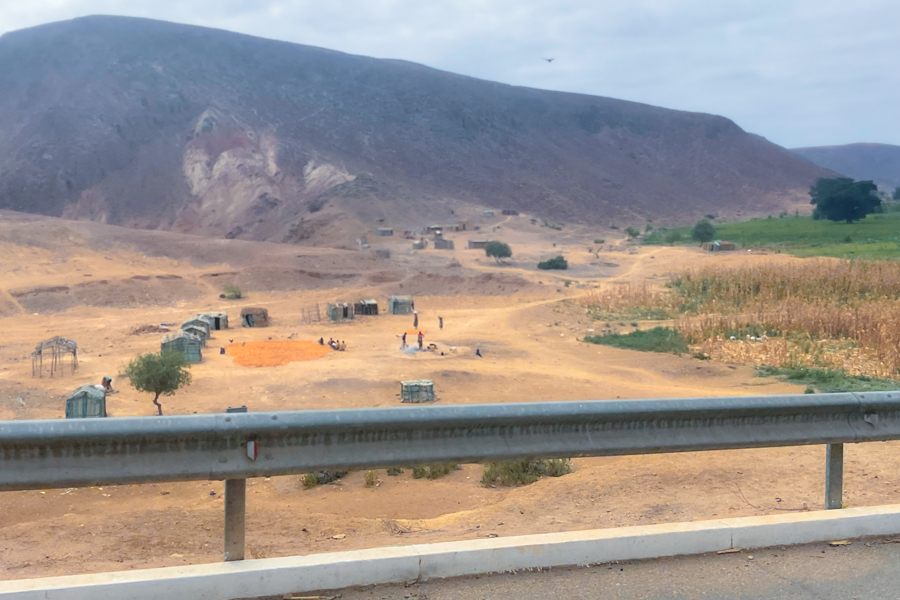
Oases of agriculture dotted the sandy desert landscape.
Finally we entered into the city of Namibe, driving down a wide avenue into town. It was a spacious bustling centre.
Some old Portuguese buildings and a few new Chinese ones. The old hotels looked much more interesting than the square gilded Chinese architecture.
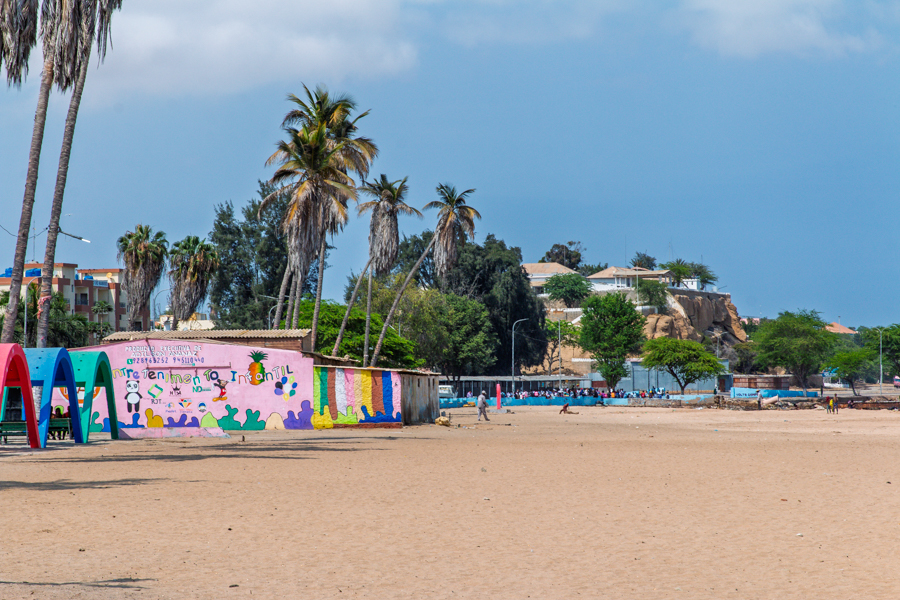
The Marginale along the waterfront had the look of a faded holiday town with decorative concrete arches, mosaic paving and palm trees.
It is lined with overpriced restaurants and people were strolling down the promenade hand in hand or sitting in the shade watching the sea.

The Marginale.

The Port
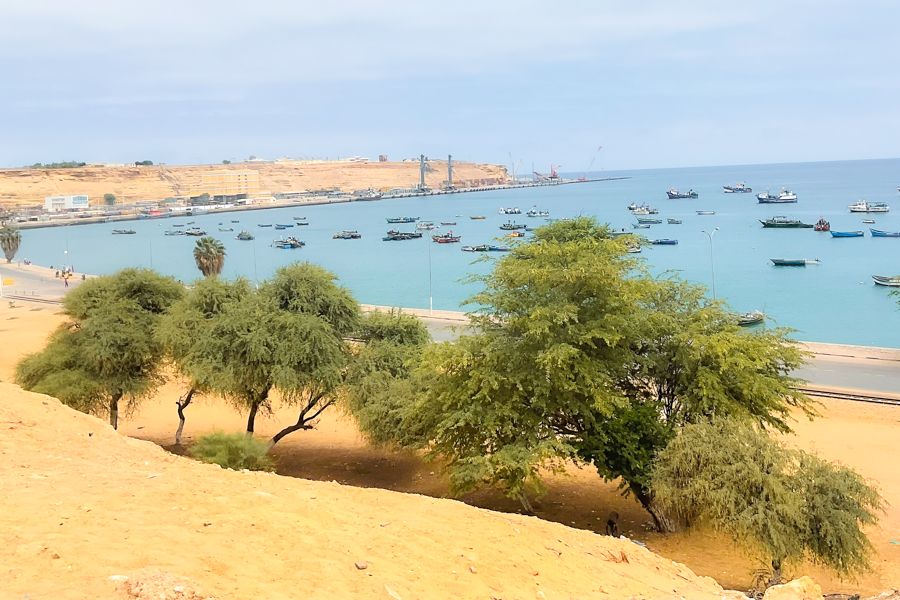
The fishing harbour.
Namibe, or Mocamedes as it is also known, is the capital of Namibe province which is largely a desert landscape, the northern reaches of the Namib desert.
More than half the population of the Namibe province live in Namibe city. It has a fairly large port and a bit of a holiday vibe.
We found a great little cafe in the centre and had our first taste of the famed Angolan pastries. Heavy on the custard but really delicious.
Portuguese cuisine is the gift that keeps on giving.

We needed to stock up and get some more cash. Also extra gerry cans for fuel. We were headed for Iona NP eventually and that is a true wilderness without fuel or water.
We struck out with gerry cans in the shops but Duran from Lubango had given us contact details for a Lebanese lady who ran the cafe next to ShopRite. I call them the ShopRite mafia. There is clearly a network of facilitators in Angola and they hang around ShopRite. I guess ShopRite in most towns means the centre of town and the centre of business. He had told us she could help us.
We duly trooped there and ordered some brunch with a side of gerry can. She told us to hang around and in due course a rather battered gerry arrived. Only one but better than nothing.
The girls went to get cash but the ATMs were all down and the response from the bank was that we would need to go back to Lubango. We shuffled back to our new best friend and she told us to wait, again. A shifty man with a battered briefcase stuffed with Kwanza turned up and gave us an exchange rate 10% better than the bank. We stuffed it in a paper bag and skipped away to our next adventure.
Baia dos Pipas

-
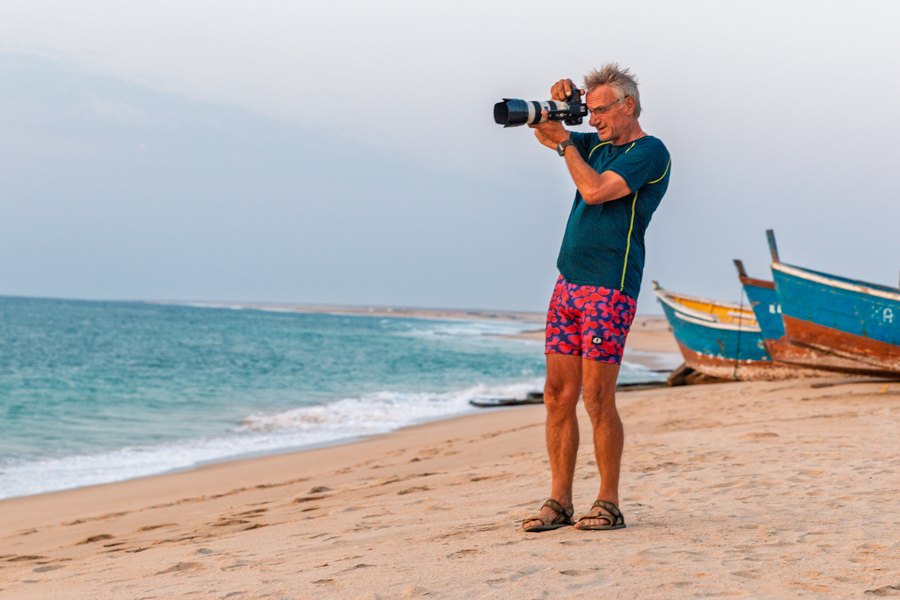 Shooting the boats in the bay.
 -
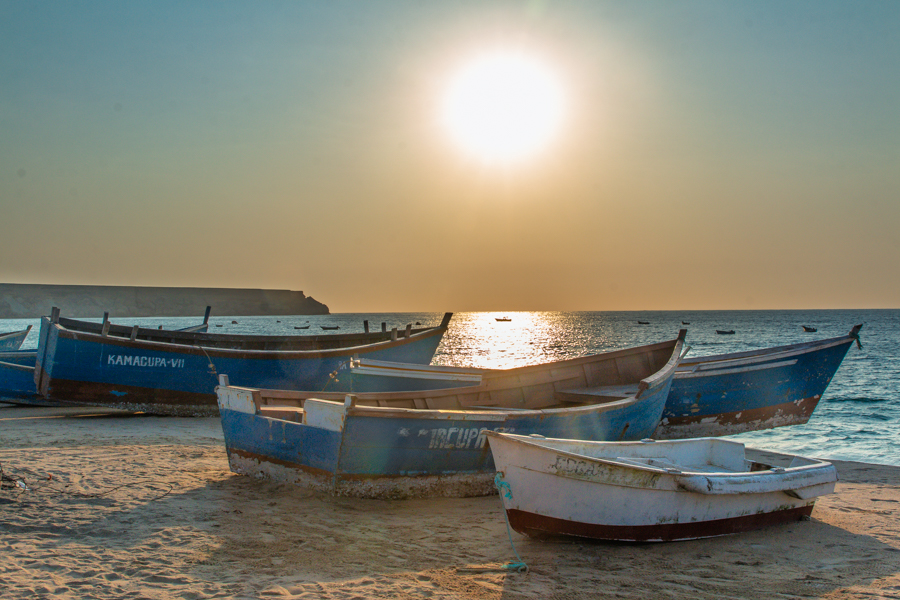
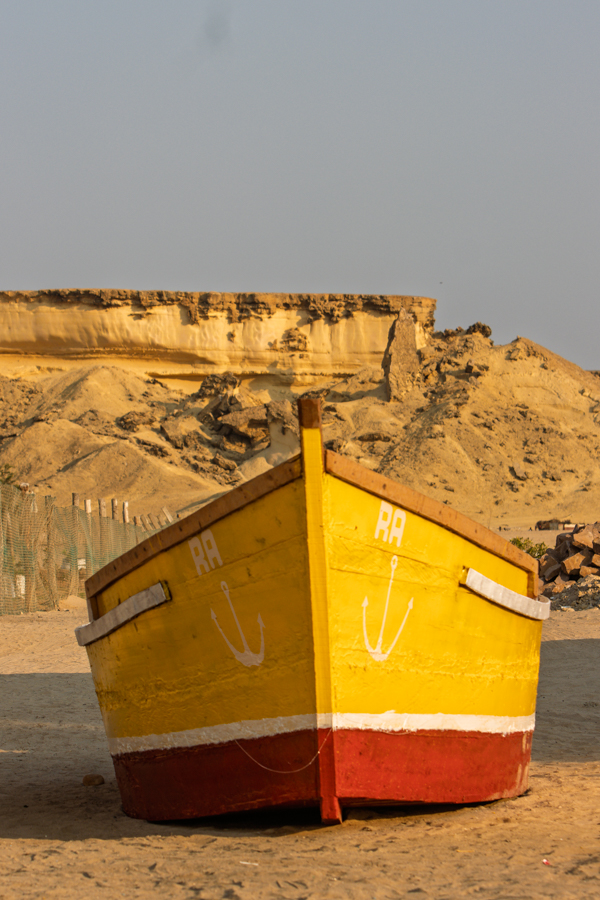
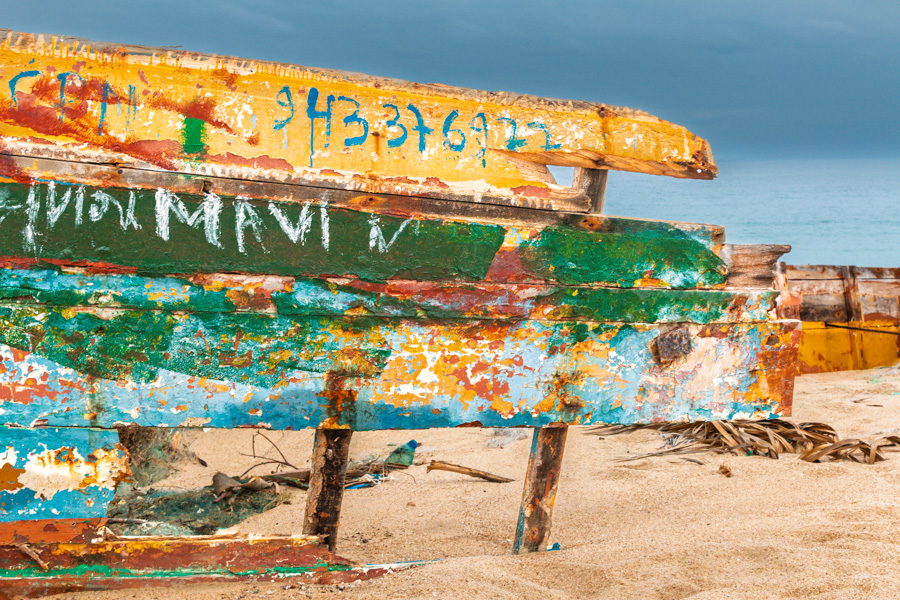 Boats in various stages of decay decorated the beach.
 -
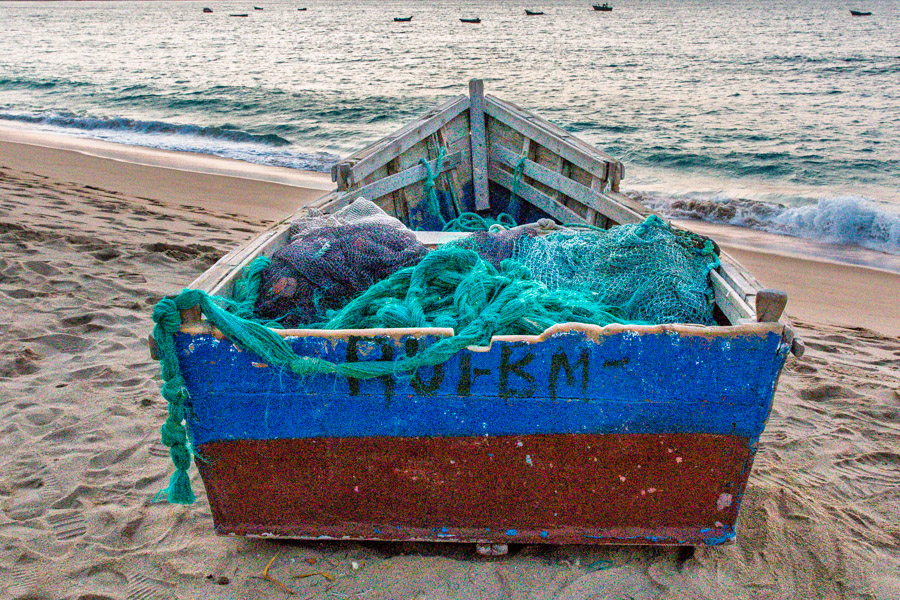 A fishing boat.
 -
 View down the beach.
 -
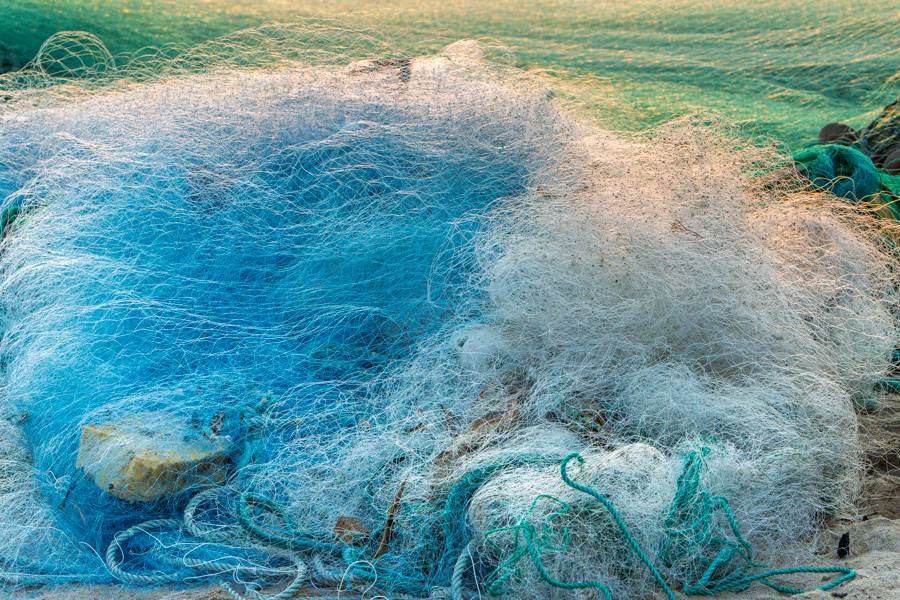 Tangles of fishing net were everywhere but actually they are expertly folded ready to be redeployed.
 -
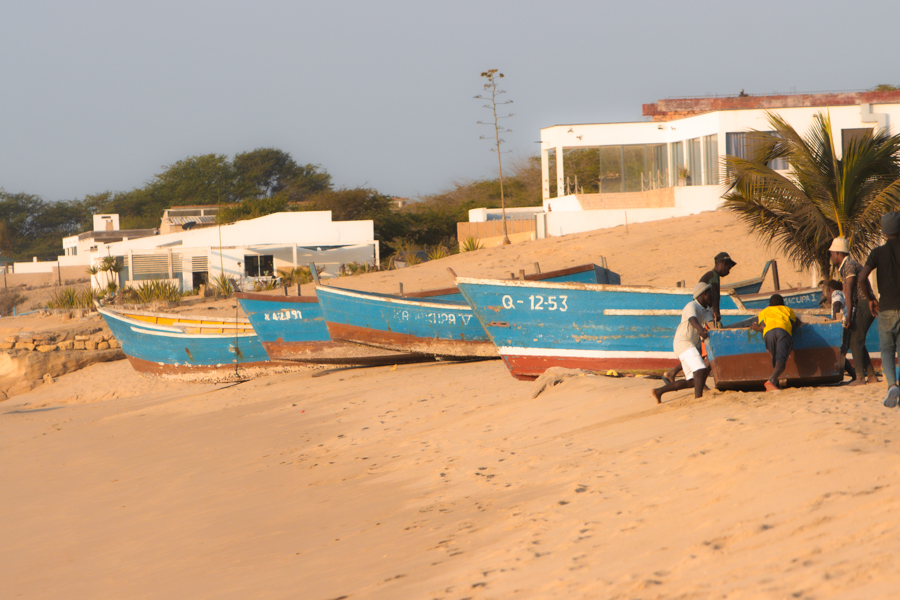 Boats on the beach infront of some of the new houses.
 -
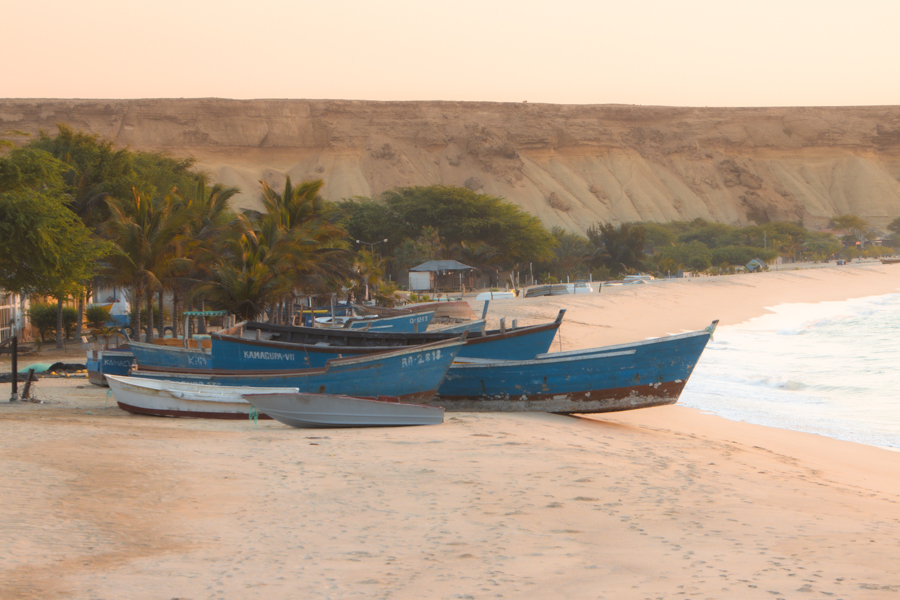 Fishing boats at dusk.
 -
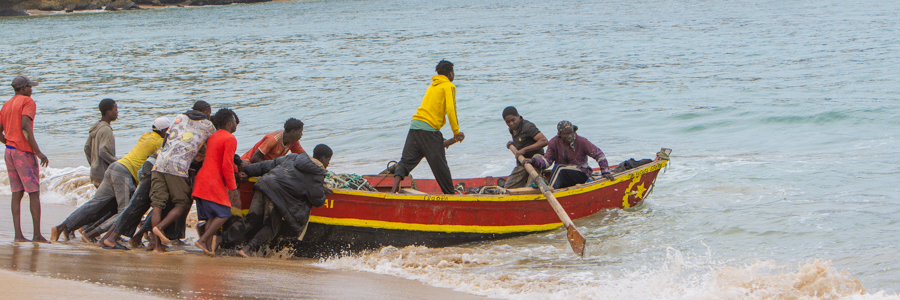
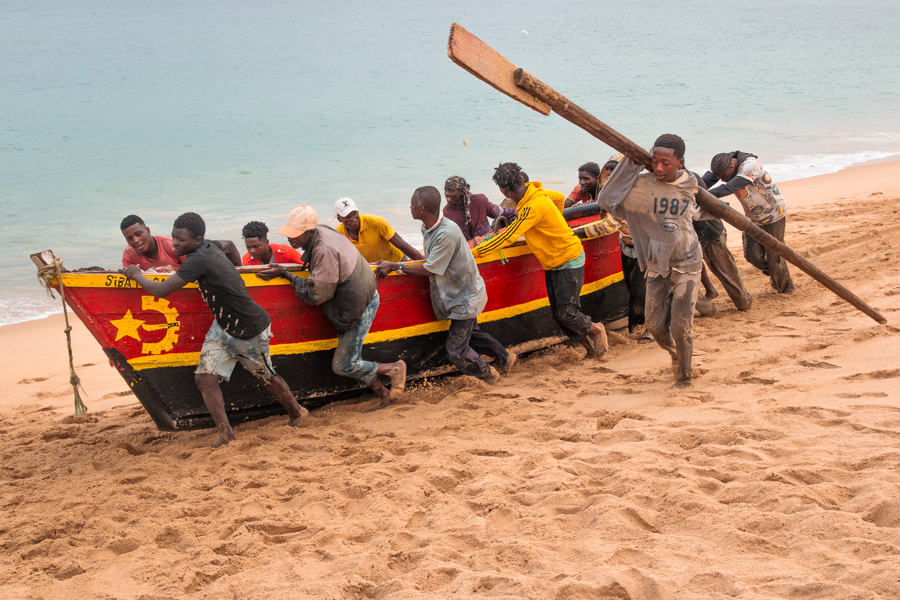 Launching the boats took all the man power of the community.
 -
 Taking the catch home.
 -
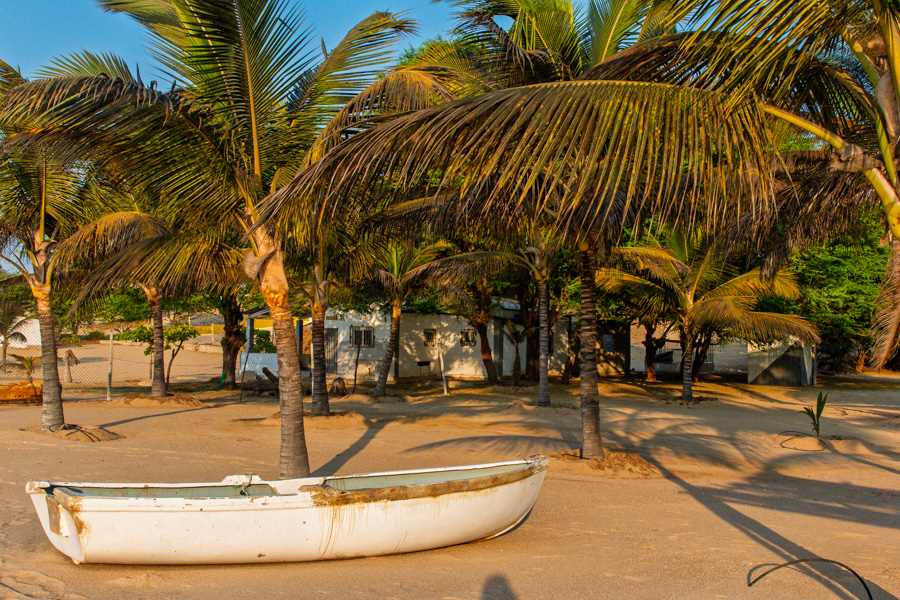 Palm trees on the beach.
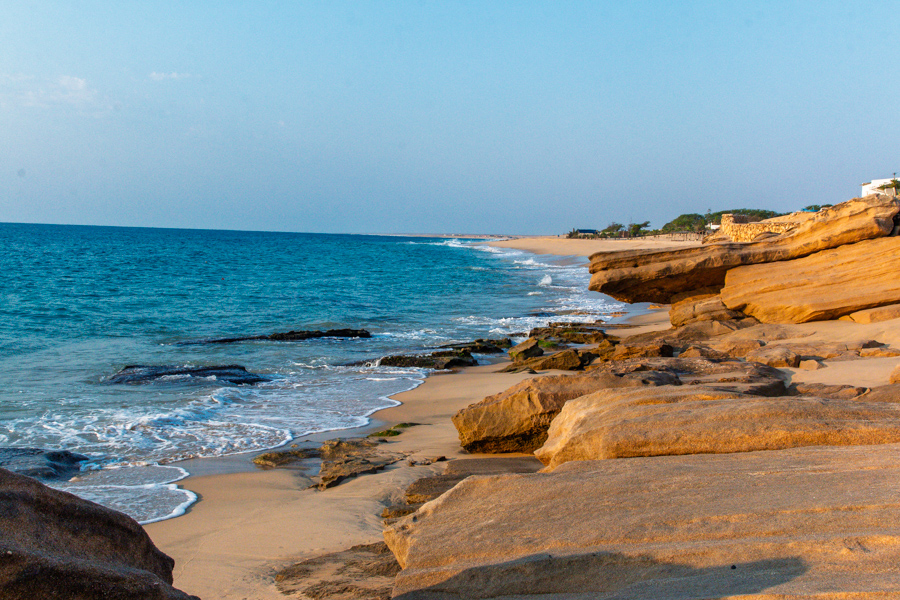

We wanted some beach time so we headed north to a bay 50 km out of town called Praia dos Pipas. Stefan had recommended it and given us direction to a campsite on the beach. Yes he was still looking after us!
At Pipas we found a small dusty fishing village on the edge of sea. Fishing boats bobbed off shore and dotted the beach. There was a lot of building work going on and partially constructed buildings everywhere, some quite lavish looking villas the further north you went. We could find no sign of the promised campsite and communication was difficult, no one understood English or google.
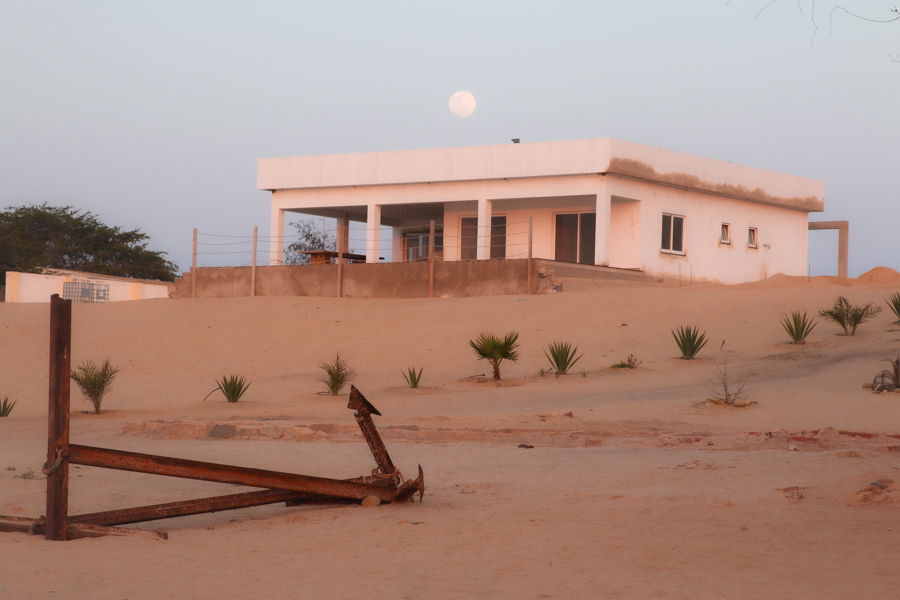

This was a first. Some enterprising developer was building a house of old tyres. A project for Grand Designs I think.
We were getting a bit frantic when we drove into the yard of a guy with a few goats and a tangle of children.
He was solicitous but still had no English. He managed to tell us through mime that the campsite was closed but that we could camp on one of his properties next to the sea, no charge.
We will be acing charades next time we play!
He fired up an ATV, or at least he tried to. We had to push start him.
We followed him to a building site just behind the beach. He is building a bar or something. There were some derelict roofless buildings and piles of sand and cement and barbed wire. He showed us a toilet in an old building, no plumbing, and he filled a jojo with water for us to use. He did not realize it had a hole and so all the water drained out but it was a very kind thought.
Anyway the site was fenced and secure. During the day a bunch of guys were working there. Building in Angola looks like a slow process.

Our makeshift campsite.
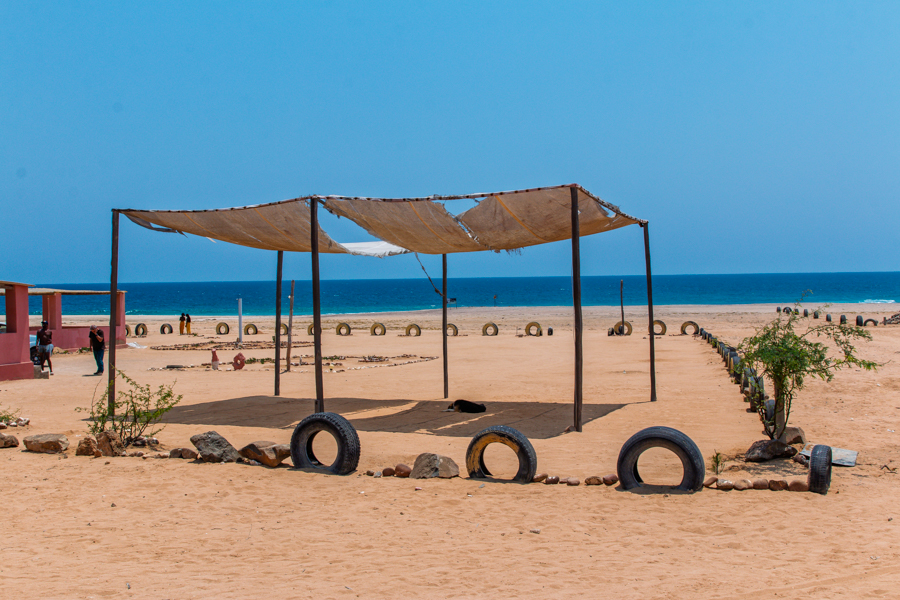
We tucked ourselves behind a bunch of rusting tools under a small tree and were soon quite comfortable. 20m from the beach we were in a perfect position. The sea was warm, nothing like the Namibian coast at all. Apparently there are different currents off this shore.
The cold seas of Namibia are due to the cold Benguela current which runs south to north up from the Cape. Angola has a warm Angolan current running north south along its shores. The Angola Benguela frontier is just about at the Angola Namibia border. That was a pleasant and welcome surprise.
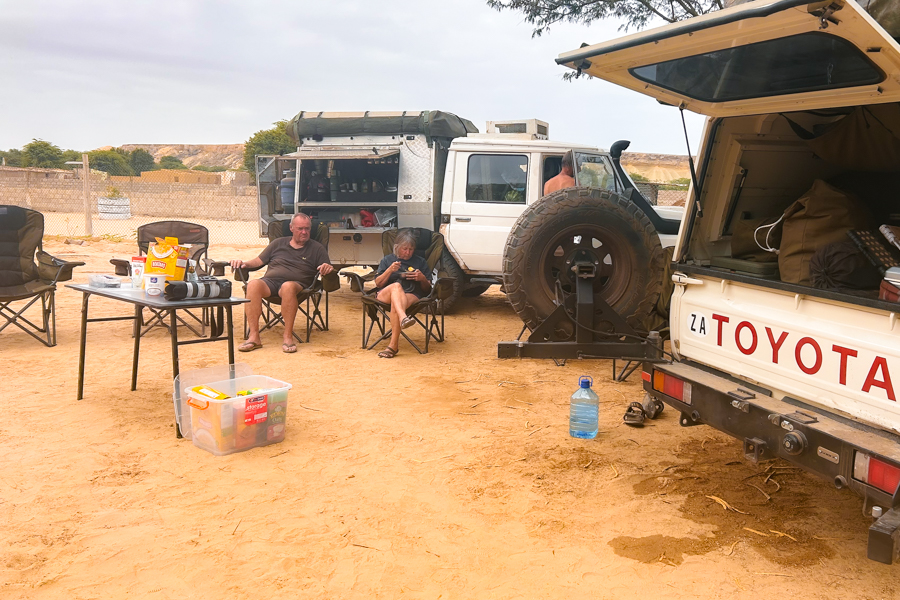
Dudley, who has a bit of a water paranoia when travelling in the desert, filled the tanks from the hose before we tasted the resultant concoction. Let's just say that salted coffee is unlikely to make the menu in coffee shops anytime soon. As for salted tea, that's even worse!
Still all water is precious and salted water is fine for washing, and mostly for cooking. It will not kill you. Much of the water on this coastal desert strip is from bore holes and salty,
We took a bit more care of our bottled water after that.

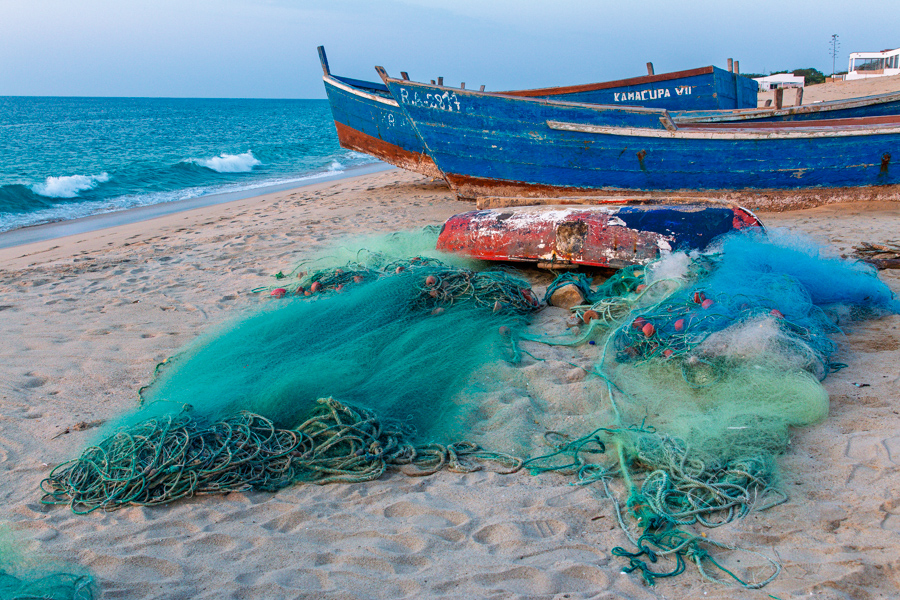
Nets were drying all along the beach.


Our first taste of the surprisingly balmy waters.
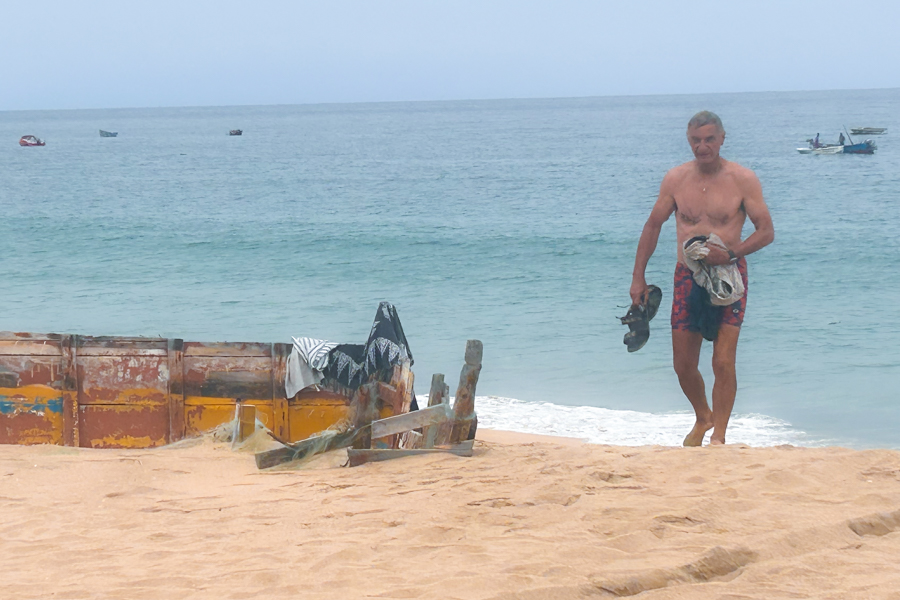

We called this the pirate ship because it had a Pirates of the Caribbean vibe. The Bay was dotted with small boats.

Pulling in the nets.
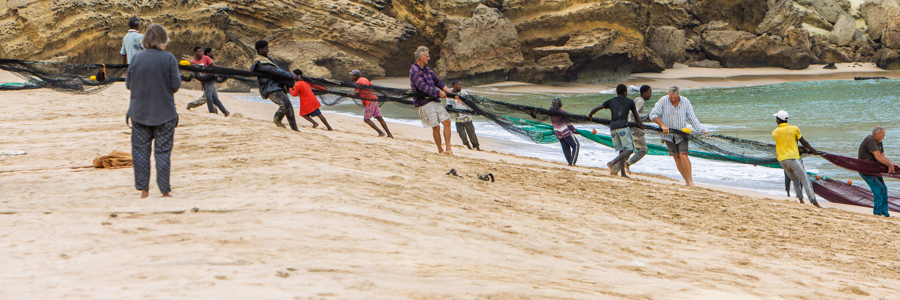

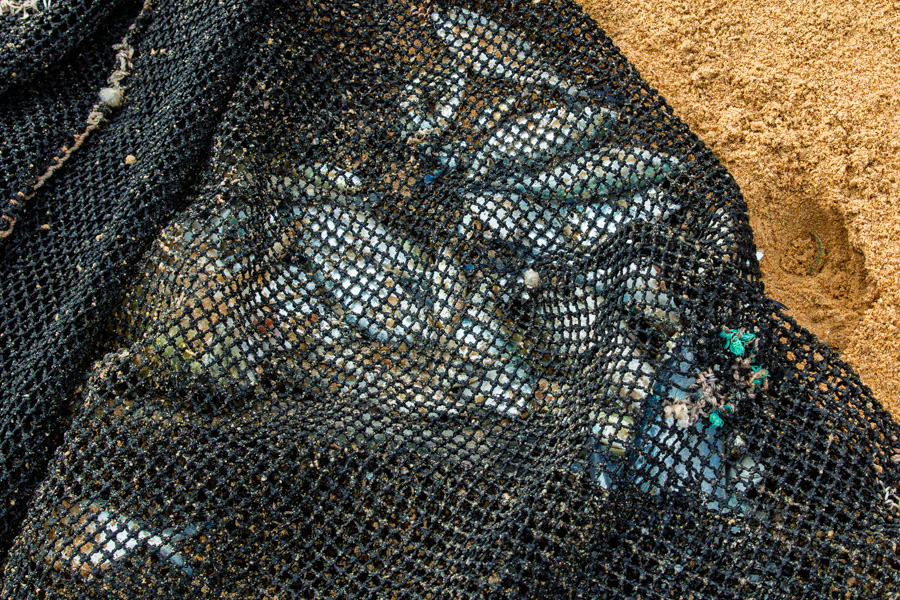
Supper.
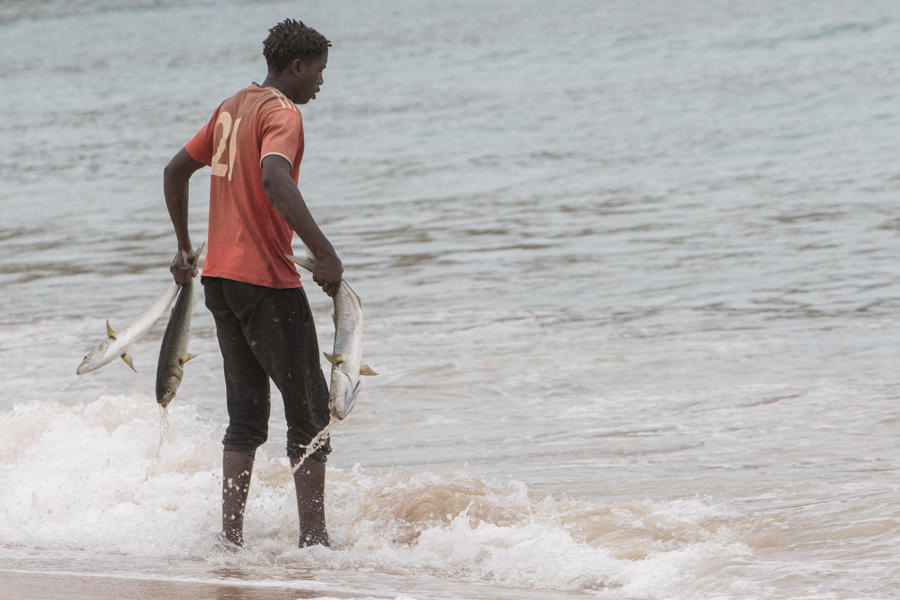
We bought fresh fish for a delicious supper off the fishermen and slept well, the workmen locked us in for the night to keep us safe!
Next day at dawn we hit the beach to watch the fishermen.
They were preparing the boats and pulling in the nets and the boys mucked in to help. They pulled in a varied catch. As a result we all got quite friendly and they were happy for us to move amongst them taking photos and practicing our mime skills.


Loading the nets and relaunching the boat.

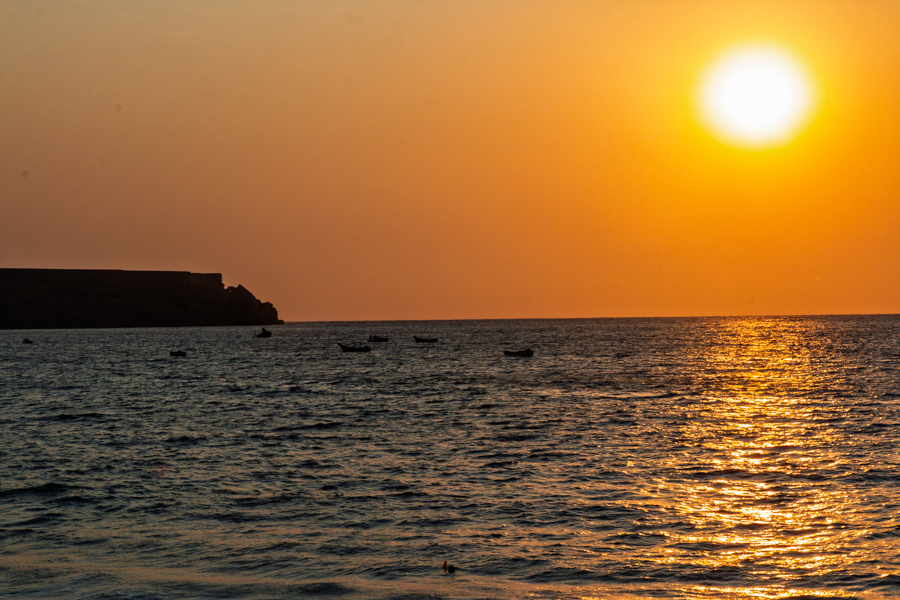
Sunset was glorious.

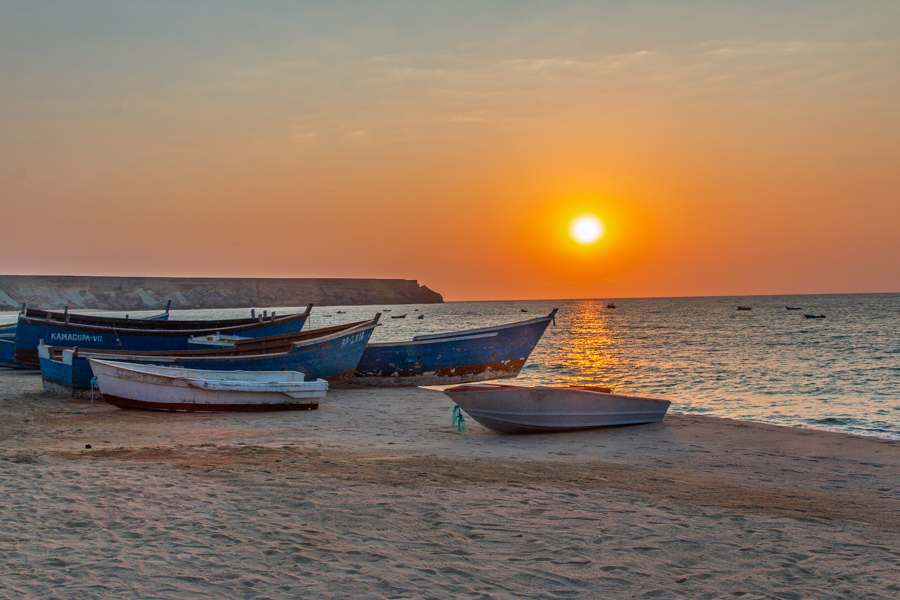
We drove out around midday next day and found a beautiful new tarred road straight into Namibe. We had wound our way through the desert on the way in. I have a feeling this little fishing village is going to become the Ballito of Namibe, rich people from Luanda are building holiday homes. Eventually there will be little left of the quaint and ramshackle place it is now and I fear the fishermen will be pushed out. That’s progress for you.
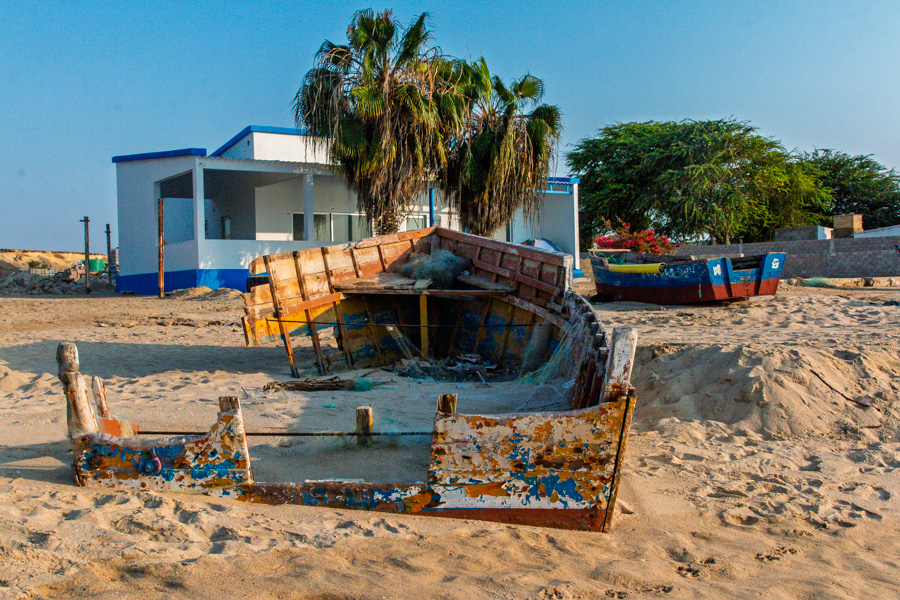
Vila Doroteia

The bar and the beach.

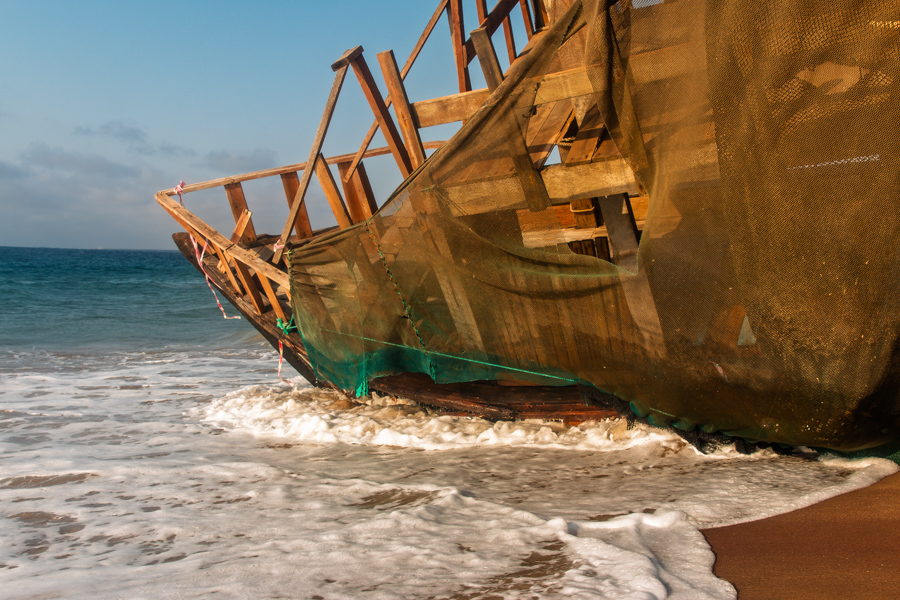
A wrecked boat used to be an extension of the dining room and bar before the waves knocked it over.
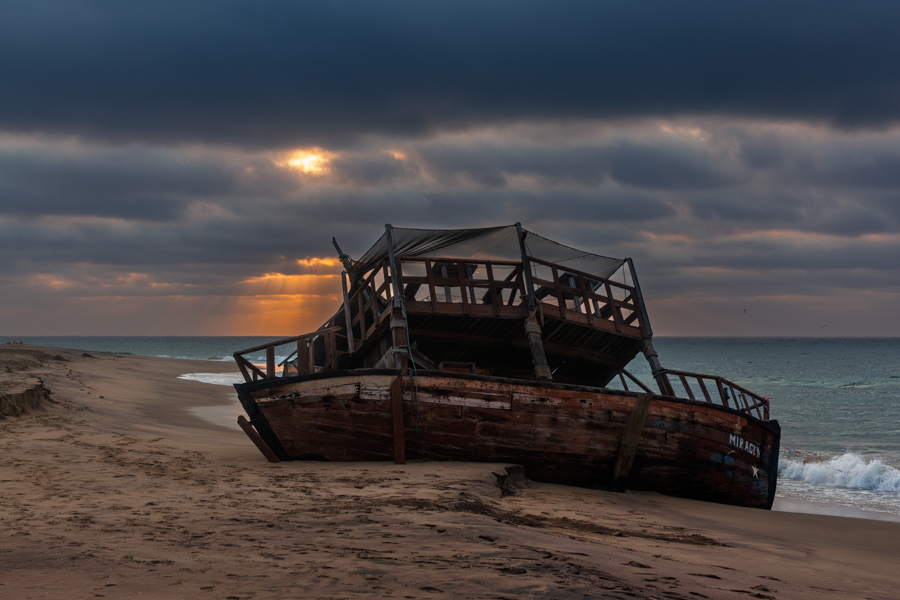
We headed to the south end of Namibe by the port and harbour to Vila Doroteia, also a recommendation from Stefan. The lodge has a series of cabins on the beach and a wonderful bar and restaurant right on the ocean. The campsite is a bleak deep sandy square at the back of the lodge but they had a shade hut and ablutions. We did need the sand ladders to get in mind you.
We went to find the owner who was Portuguese and English speaking, which was a relief.
He said we could camp with pleasure, there was no one else there after all, but he would not charge us because it was rather run down.
I was a bit gobsmacked. I mean we had just been camping in a building site so it looked pretty good in comparison. At least the toilets were plumbed in.
Anyway never look a gift horse in the mouth, we were in. He asked if we would eat in his restaurant instead of paying camp fees. We were delighted.

Views of the edge of the fishing harbour.

We had a lovely time swimming in the sea and playing cards at the bar. The view at sunset was spectacular. Supper was delicious, a real bargain.
When we left we all got stuck in the sand again, and it took quite a bit of sweat and tears to get out, but we considered it a training course. We were heading out into the desert later.
Flamingo Lodge
Flamingo lodge is pretty famous in Angolan overlanding. Stefan and his partner built it 10 years ago. He was somewhat reticent about it and I got the impression they parted company less than amicably, but we wanted to go and look.
It is 50 km south of Namibe in the desert and on the edge of the ocean.


On the road we were following another Landrover on the tar. He stopped and told us to follow him for a short cut
His shirt said he was Vincent, it turned out he was the son of the owner. He left the road onto a sandy track and we barrelled after him.
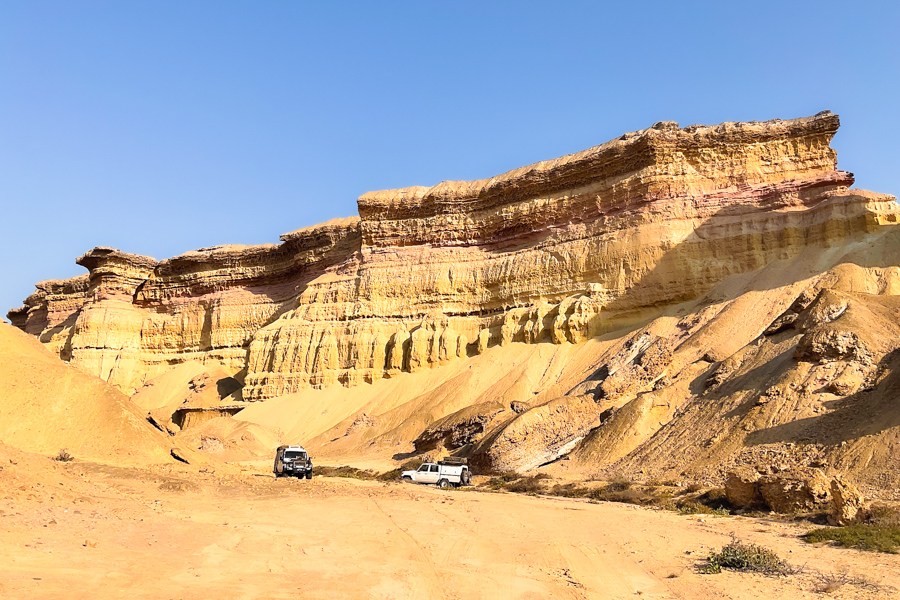
The road took us through the desert. Craggy flat topped dunes with crenelated edges and a mix of white and black sand. A bit like flat topped sand castles. Gullies and peaks. Soft sand in places and gravel elsewhere. We drove down a dry river bed and saw our first Welwitschia. A bleak but impressive landscape.
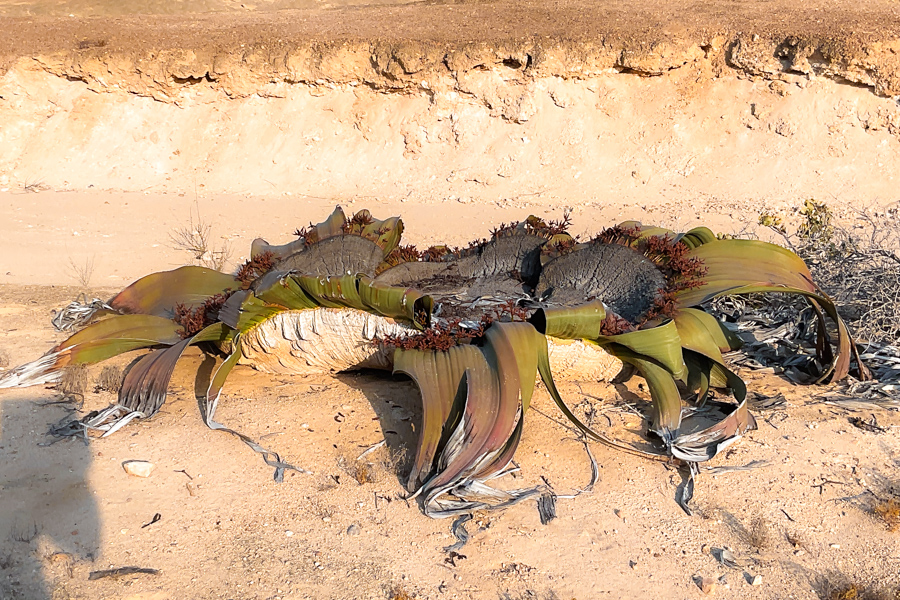
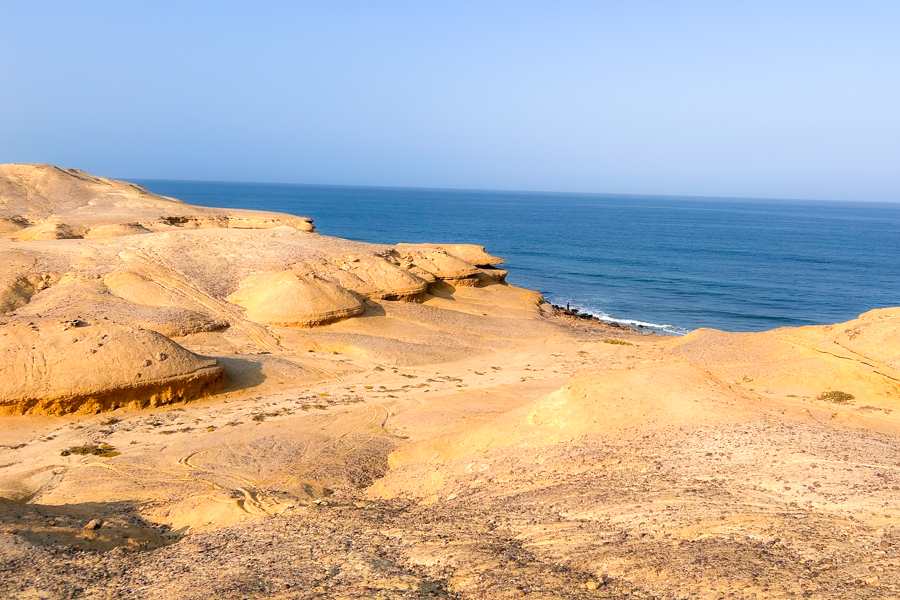
Eventually we popped out at the sea and we drove down the beach until we could see Flamingo Lodge, a collection of wooden cottages and a bar on a cliff overlooking the sea. 3 campsites were set back behind the main lodge, each with a bathroom, shade and kitchen area.
Vincent had told them we were coming and they were cleaning up one of the camps for us. Next door was a German couple otherwise the place was deserted.
In the bar they had a pet monkey, cat and dog

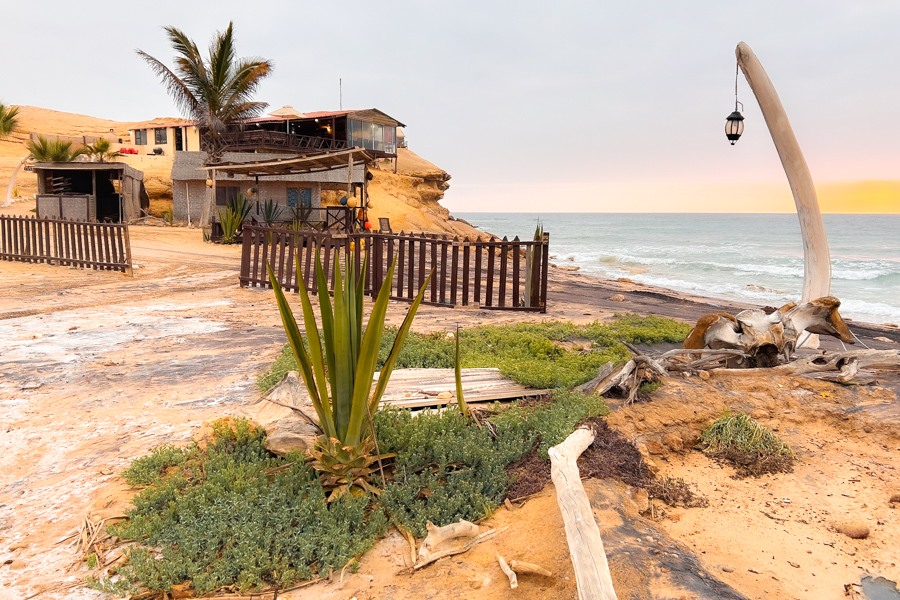

The Bar.


Whale bone decor.

We spent the next 3 days walking and driving the dunes and desert. It was beautiful, pieces of quartz glittered like diamonds.
There were so many whale bones scattered around. The lodge had used them to create arches and line the paths. It gave a really unique ambiance to the place.
Spoor of hyena, jackal and small buck were common and we spotted a few shifty jackal skulking but game was generally well hidden.
We drank at the bar overlooking the sea, swam and played cards and watched the orange sunrise and sunset stain the sky. The night sky was amazing, a sign of things to come.
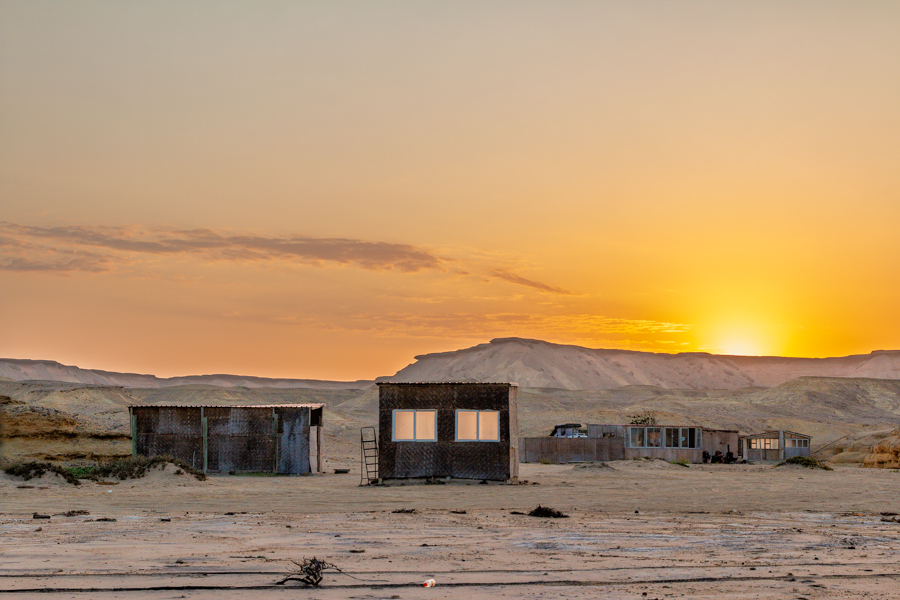

The camp site.

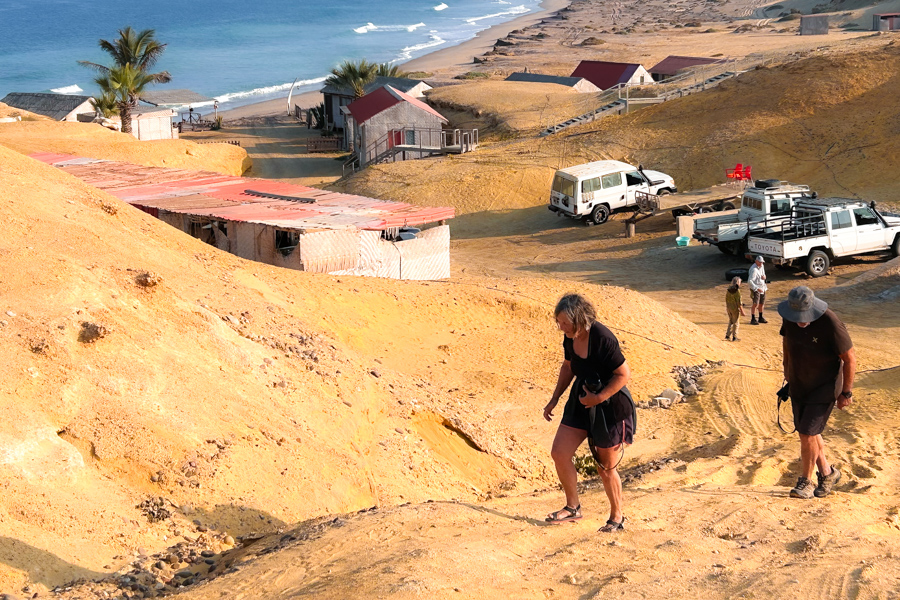
Exploring the dunes.

On foot.
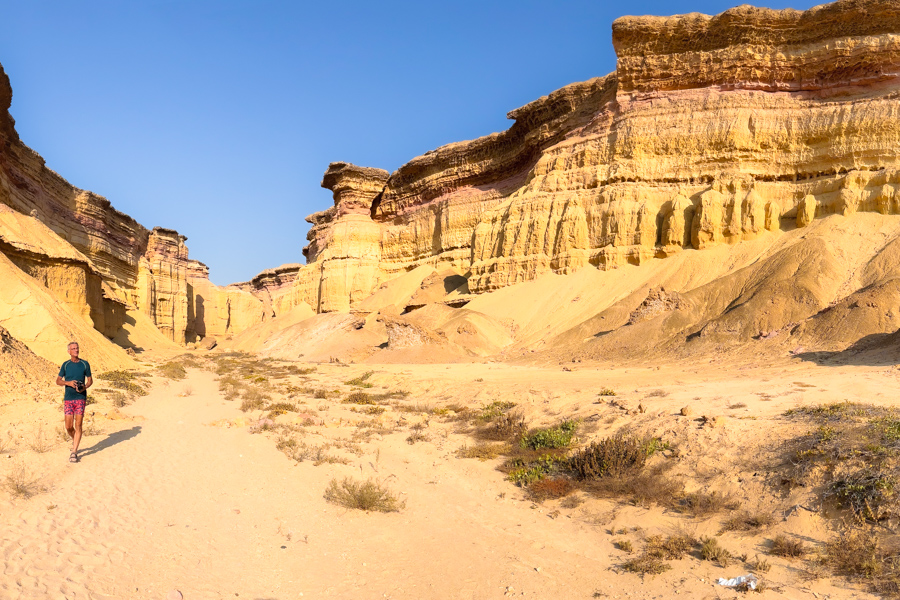
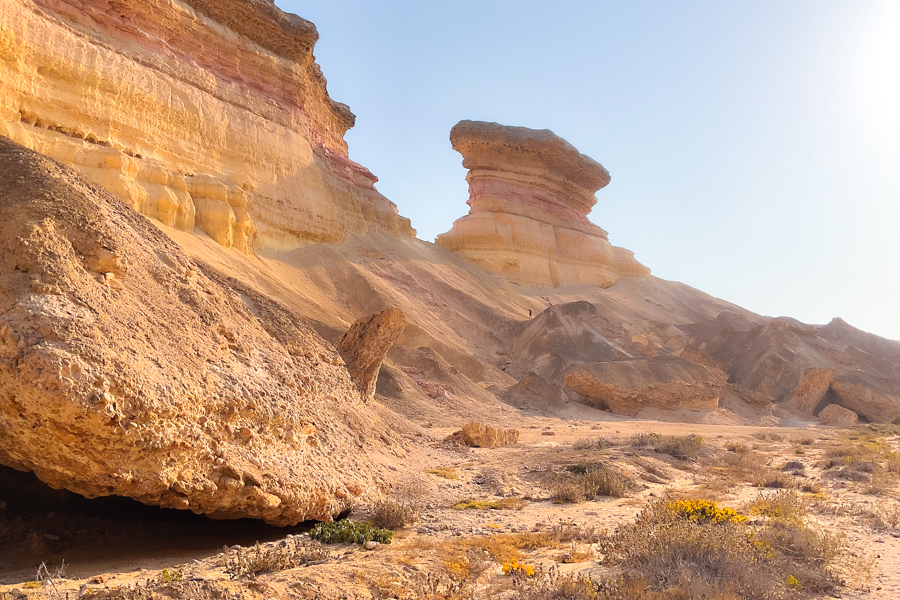
If you look hard you will see Mike up on the edge of the dune crests.
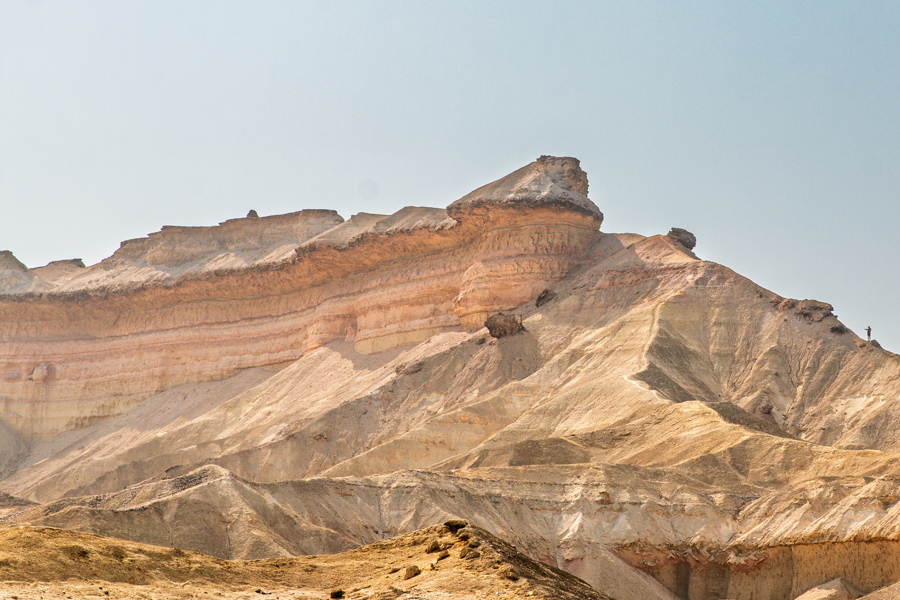
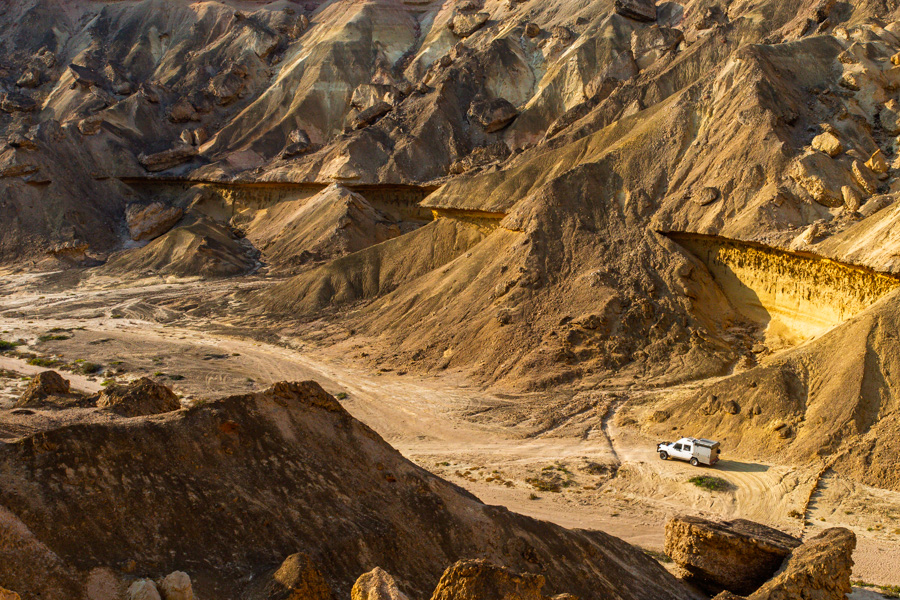
Driving down the wadis.
We were keen to try and reach a spot called Baia dos Tigres, an abandoned fishing village 150 km further south. It is reputed to be very scenic. The village was marooned from the coast onto a small island in 1962 and then abandoned. The only access is by a ride along the beach between the waves and the dunes. This run is known as Deaths Acre and is the only road the hire car insurance categorically does not cover. Just saying. If you time it wrong you will be history. You can access it for 2 days either side of spring tide with the new moon.
We happened to be close to the right time but we had been warned that it would be impassable because the seas had been particularly rough in the last 2 weeks and carved out the beach. Stefan had tried to organise it for us but eventually said it was too dangerous. Vincent said he could get us there but then he disappeared into town. I don’t actually think he knew what he was saying and his boatman said it was too dangerous.
Sadly we had to consign this adventure for another day, another trip.
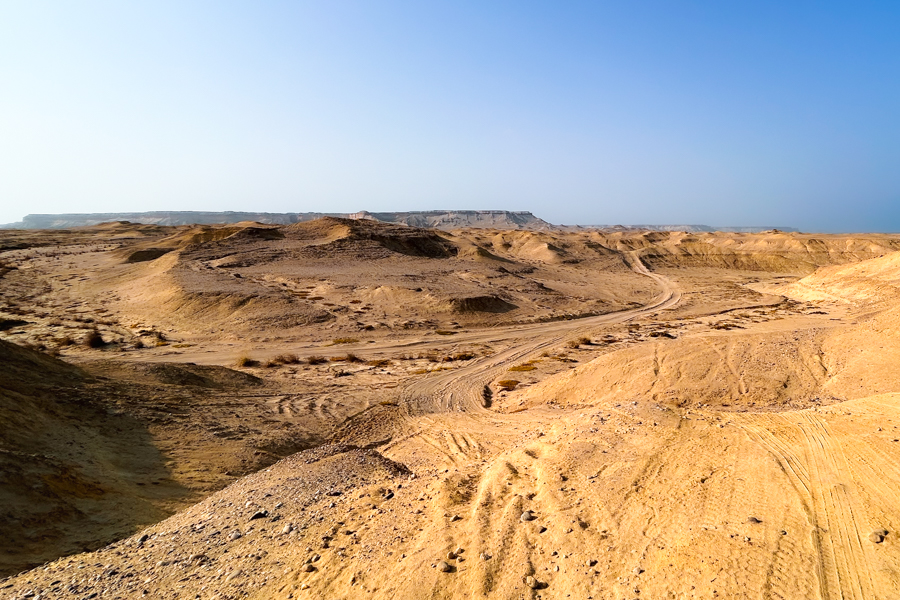
The road South but sadly it was not to be.

So it was time to leave the coast and travel back inland to find some more of the special places this surprising country had to offer us. Fuel remained a concern so we decided to run a circular route to some 2000 year old cave paintings and then to some incredible wind sculpted rocks before returning to the coast for fuel.