

Rainbow Sea Slugs
Nudibranchs are a great favourite of all underwater photographers. The bright colours and relatively slow movements give lots of scope to snap the picture, although getting them "in motion" or in the right position can be tricky.
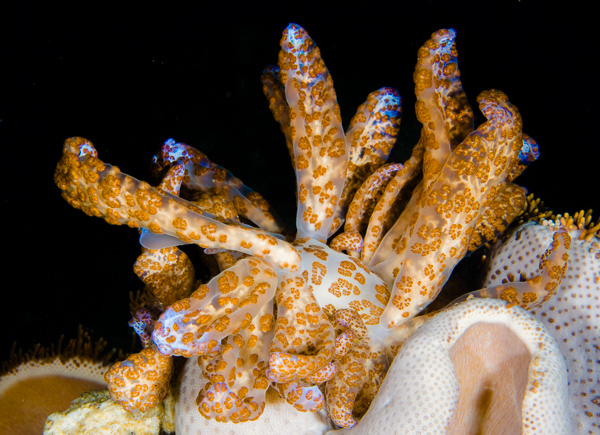
They are derived from the gastropod family related to snails. They have adapted by losing their shells in favour of mobility. Most are smooth and slender but some groups are more disorganised with protuberances and fronds adding to their camouflage. I still don't know which is the head and which is the tail of this solar nudibranch, Phyllodesmium longicrrum, feeding on leather coral.
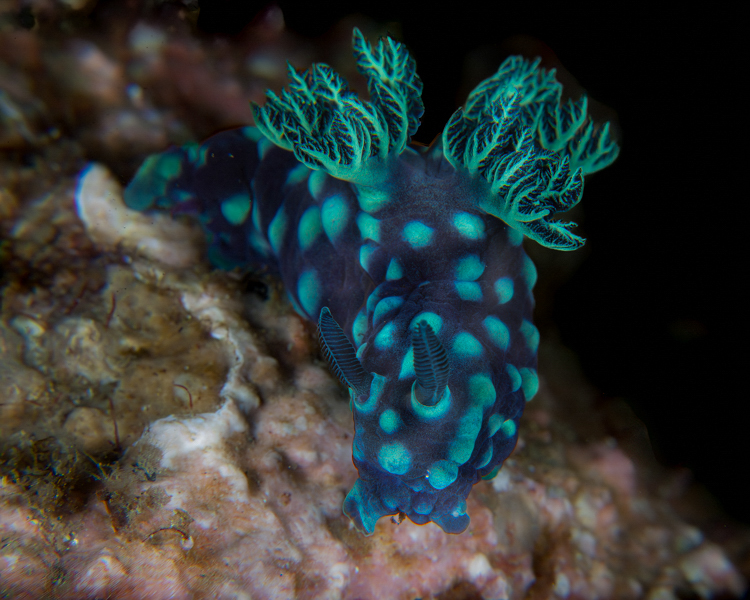
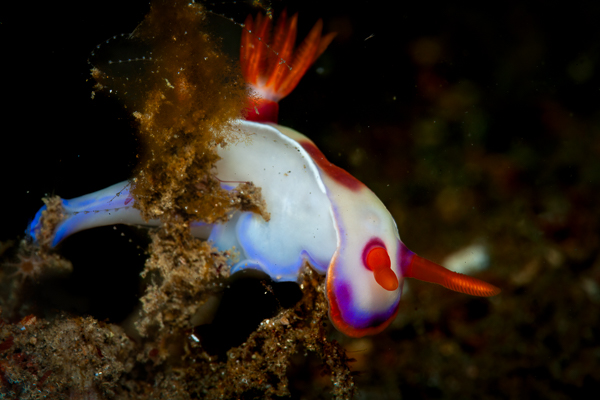
Nudibranchs
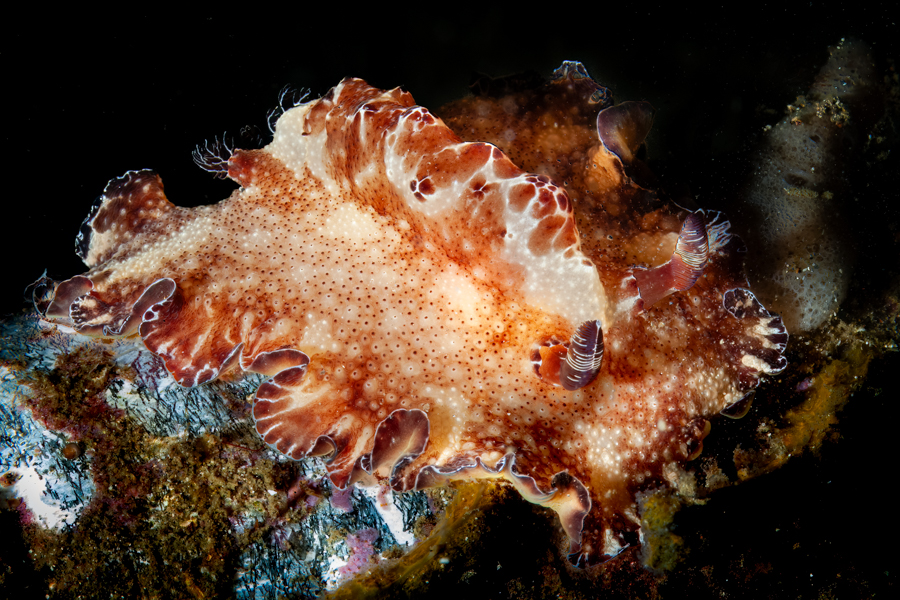
Discodoris boholiensis
Characterised by a longitudinal ridge or visceral hump in the centre of the back. Nocturnal, it spends the day in crevices. If caught out in the day it moves fast to cover, a behaviour known a photokinesis. I guess this represents the rare sight of a running nudibranch!
The term nudibranch comes from the latin meaning "naked gills". They occur world wide and live at all depths. The greatest diversity of nudibranchs is found in warm shallow waters.
They are benthic animals and found crawling over the sea floor and across the reefscape with a few exceptions that may free swim.
The eyes in nudibranchs are rudimentary and are able to decern little more than light and dark. Cephalic tentacles are sensitive to touch, taste and smell and club shaped rhinophores on the head detect odours.
2 species of nudibranch have been observed emitting sounds audible to humans.

Risbecia Tyroni
This species feeds on sponges and are often found travelling in pairs, frequently one behind the other.
Nudibranchs all have a rasping tongue called a radula for collecting food from the rocks and coral, and a large fleshy foot covered in a gill mantle. The head has two sensory organs called rhinophores which act as a nose, detecting and directing the animal toward delicious smells.
Their most common defence is by secreting toxins which render them poisonous or unpalatable to potential predators. Sometimes these are concentrated from their prey. They advertise this with their bright colours.
Some, such as the aeolid family or gas flame nudibranchs, are able to put the stinging cells of their prey on their backs to protect themselves.
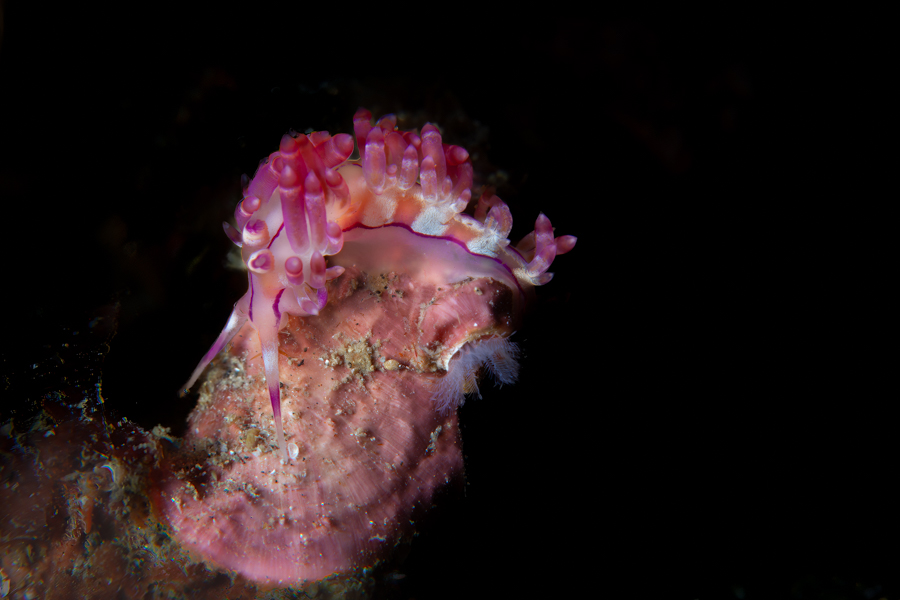
Flabellina rubrolineata, a member of the aeolid family

Nembrotha purpureolineata
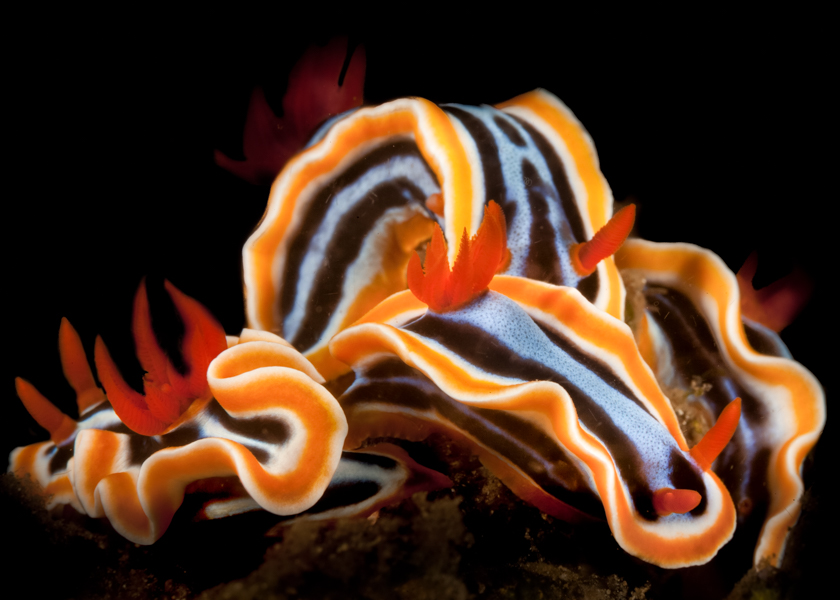
Chromodoris Hamiltoni
Nudibranchs are simultaneous hermaphrodites (male and female at the same time) but do not fertilise their own eggs. Sperm is transferred from one to another by means of a tube extended from behind the head on the right side of the animal to an opening behind the head on the right side of the partner. This arrangement means that mating nudibranchs have to line up with their right sides together. Mating is often reciprocal, each partner transferring and receiving sperm. Eggs are contained in capsules, which are typically laid in long, convoluted ribbons.
Sometimes several individuals are gathered together at mating time, suggesting a molluscan orgy. However, because it does not seem possible for more than two individuals to be mating at the same time, this might be a competitive, jostling struggle for mating privileges, or merely lining up for the next opportunity, like this tangle of chromodoris.
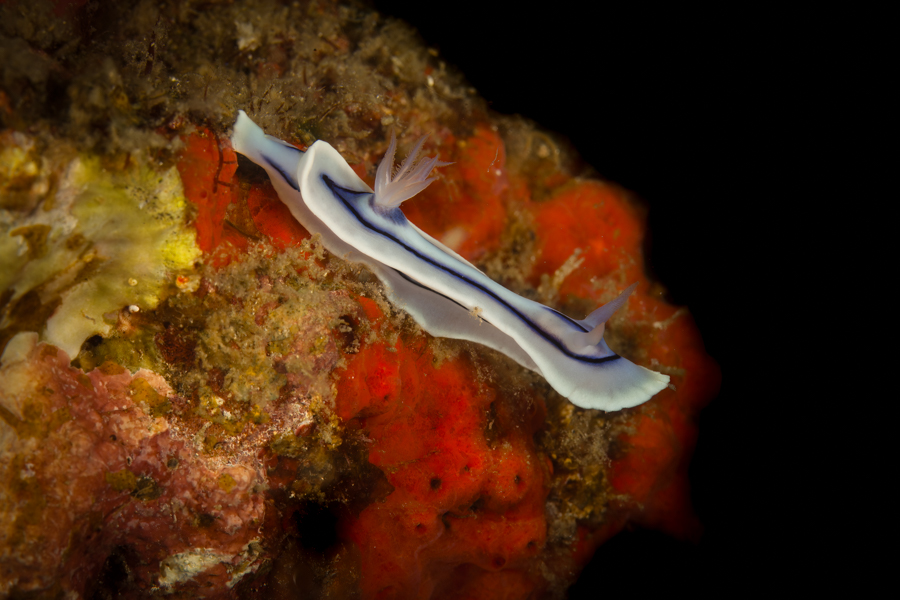
Chromodoris lochi
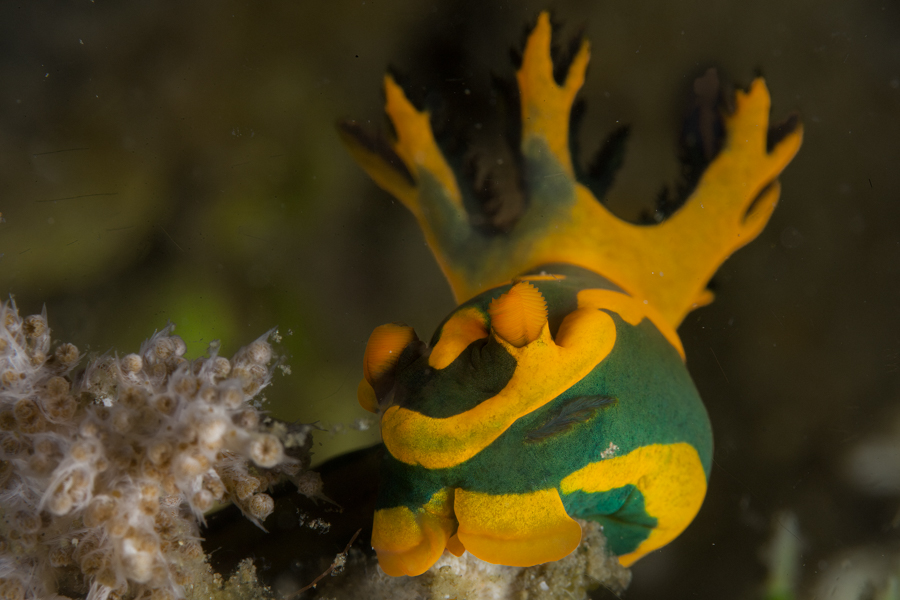
Tambja gabrielae

Blue Dragon nudibranch
This sea slug feeds on hydroids which contain microscopic dinoflagellates that are photosynthetic. The microscopic Symbiodinium acquired from the hydroids are 'farmed' in the sea slug's digestive diverticula, The nudibranch gains enough photosythetically derived sugars to sustain it without feeding.

Persian carpet flatworm, Pseudobiceros bedfordi
Flat worms may look like nudibranches, especially when brightly coloured but they are part of a much simpler group of organisms. They are often found free swimming using undulations of the body to move through the water. They have no gills or internal organs apart from a very basic digestive cavity. Oxygen and nutrients enter the body by diffusion.

Sap sucking sea slug, Plakobranchidae elysia
Sacoglossa, commonly known as "solar-powered sea slugs", are a superorder of small sea slugs. Sacoglossans live by ingesting the cellular contents of algae, hence they are sometimes called "sap-sucking sea slugs".
The sacoglossans can use the chloroplasts of the algae on which they feed, which they keep alive for hours to months after their ingestion. They maintain the cells and metabolise the photosynthetic products. This process is termed kleptoplasty and they have been known to survive for months living solely on the photosynthetic products of their acquired plastids.
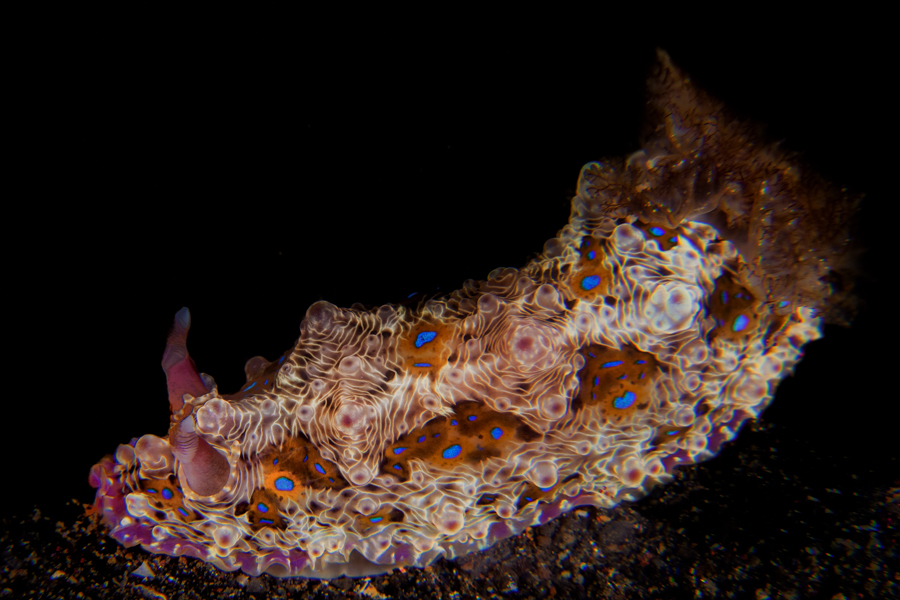
Dendrodoris denisoni
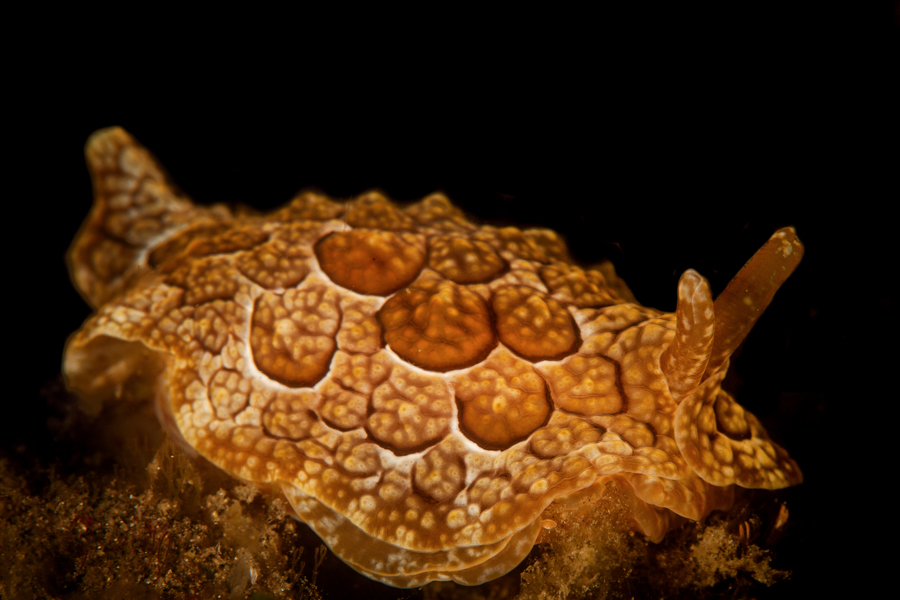
Pleurobranchus forskali